30 YEARS HAUKARI e.V.
Together with you, we want to look back on 30 years of HAUKARI e.V. this year! What issues have we dealt with over the years? Who has accompanied us on our journey? What have we achieved? And what do we still want to achieve?
Table of Contents
1995

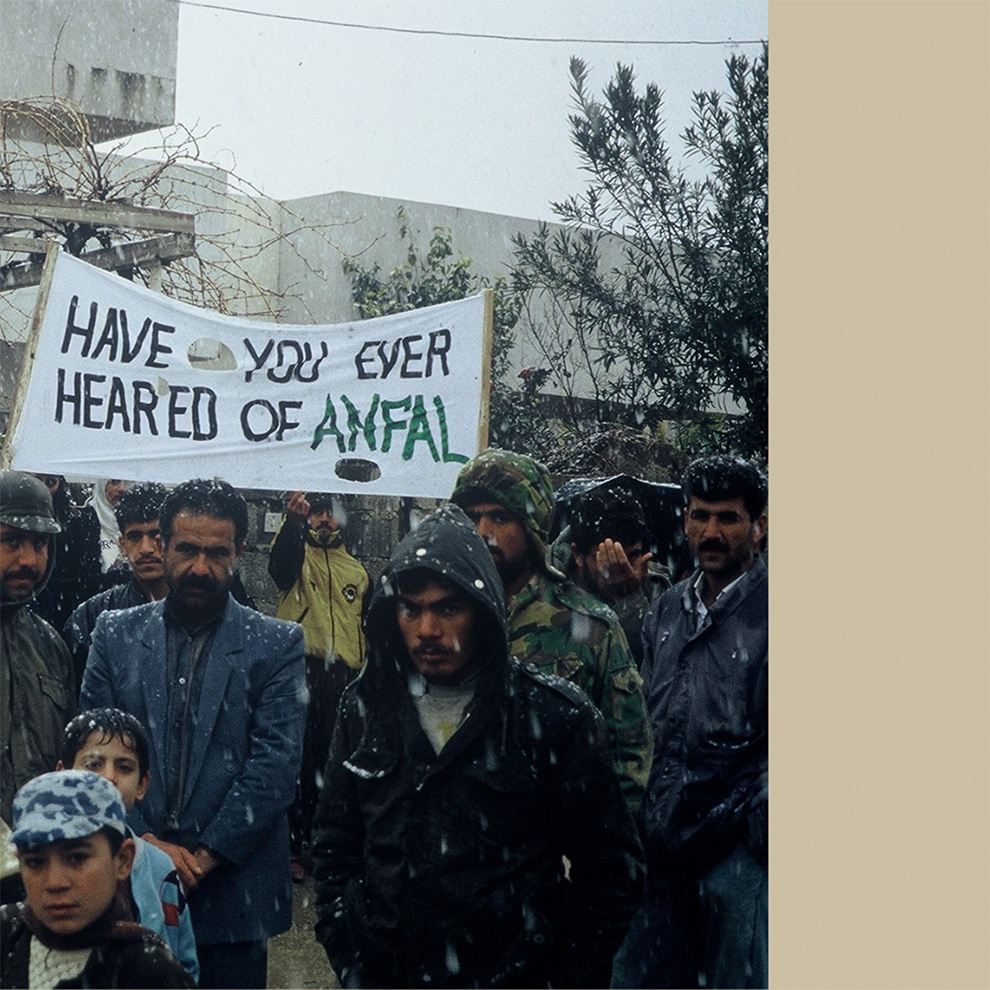
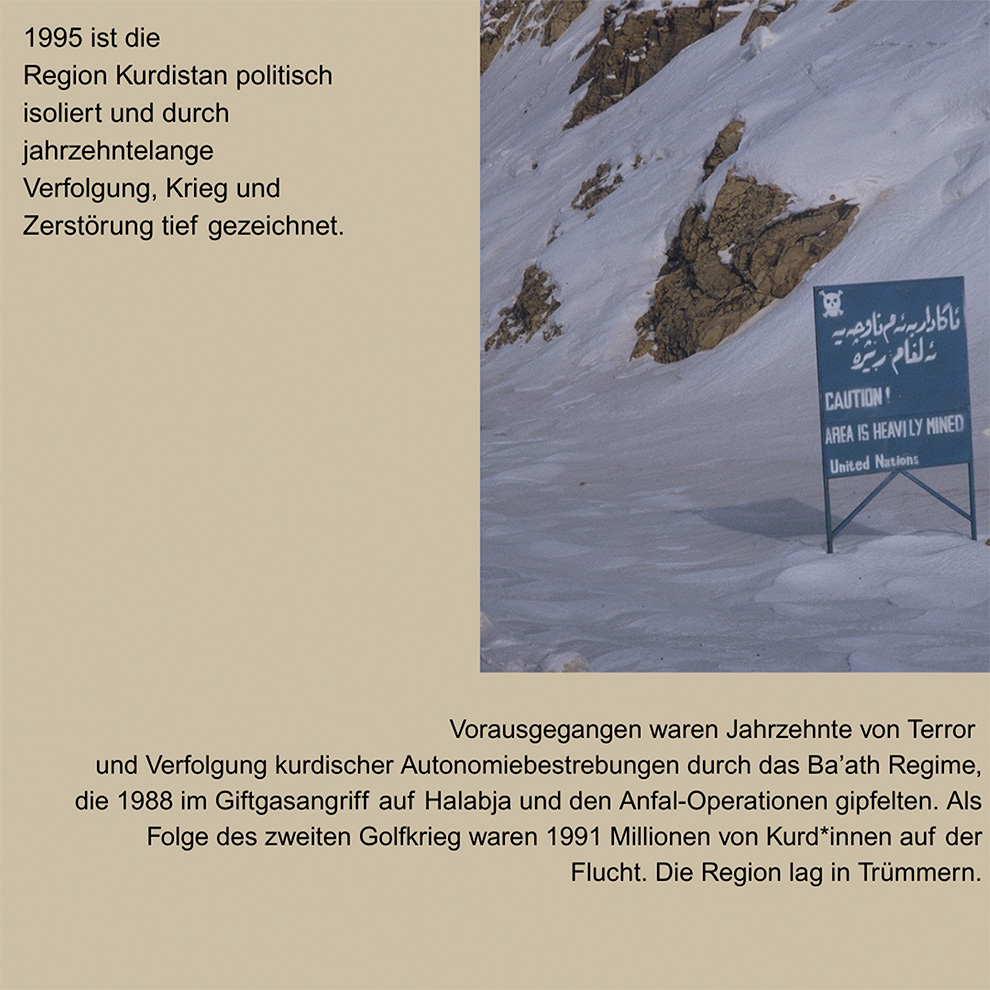
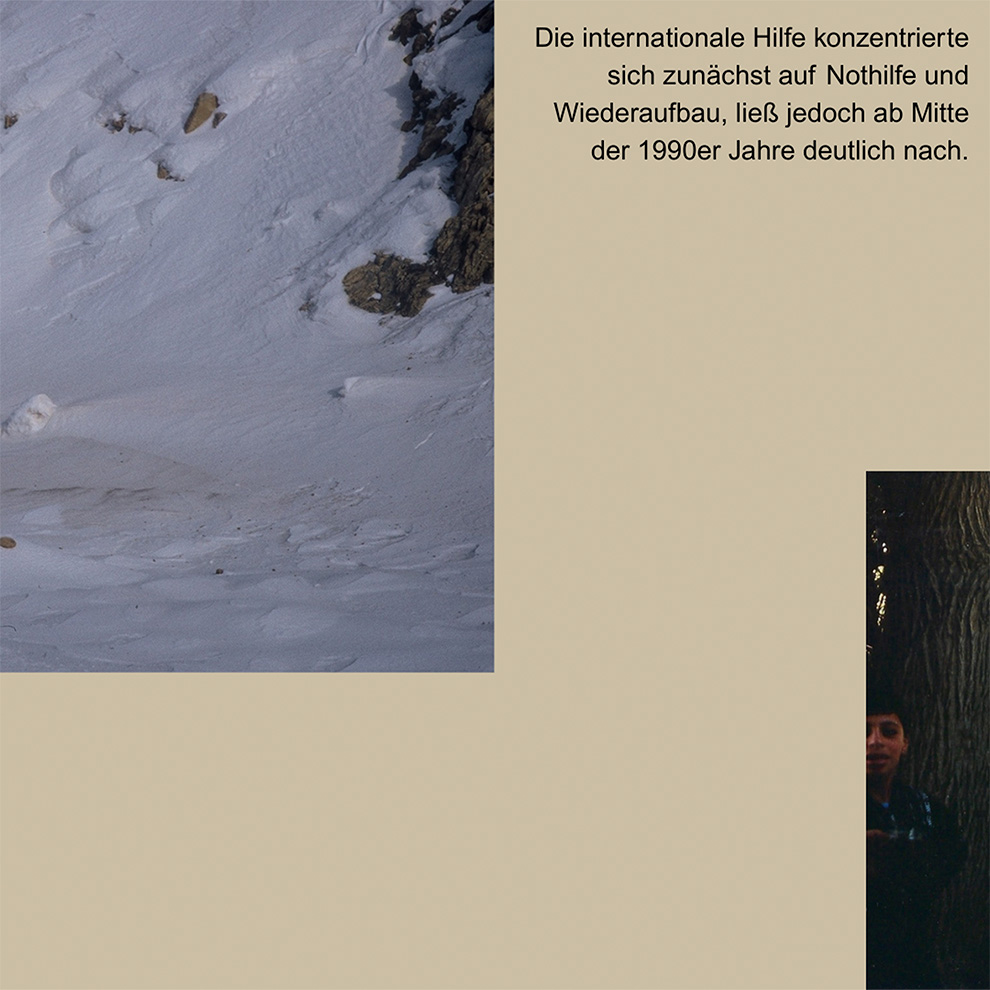
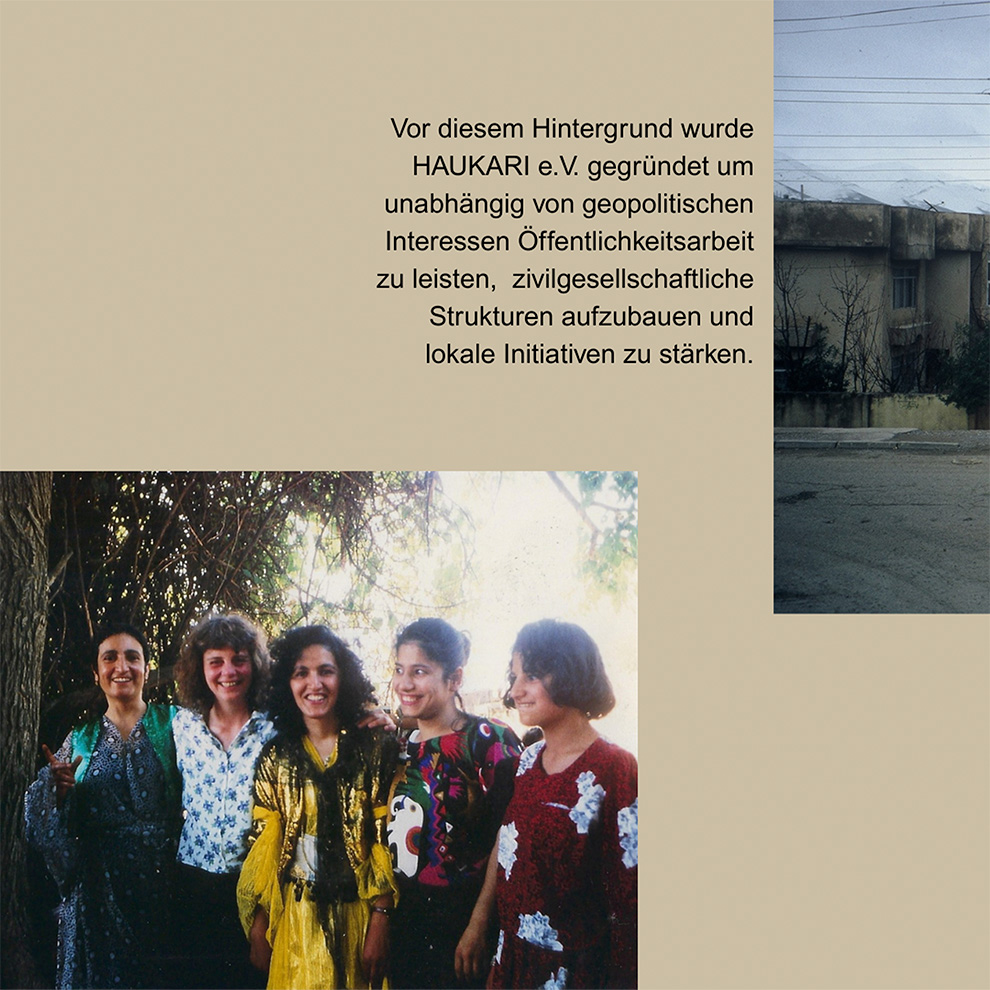
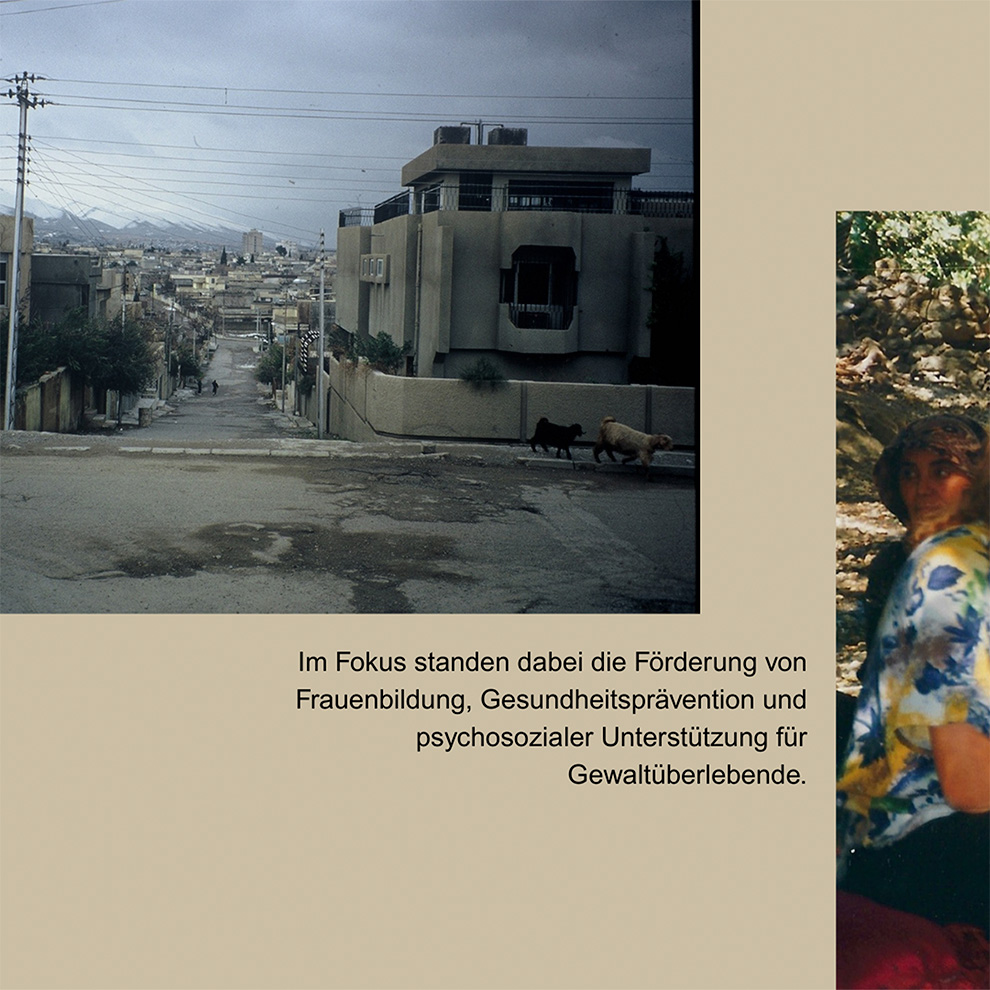
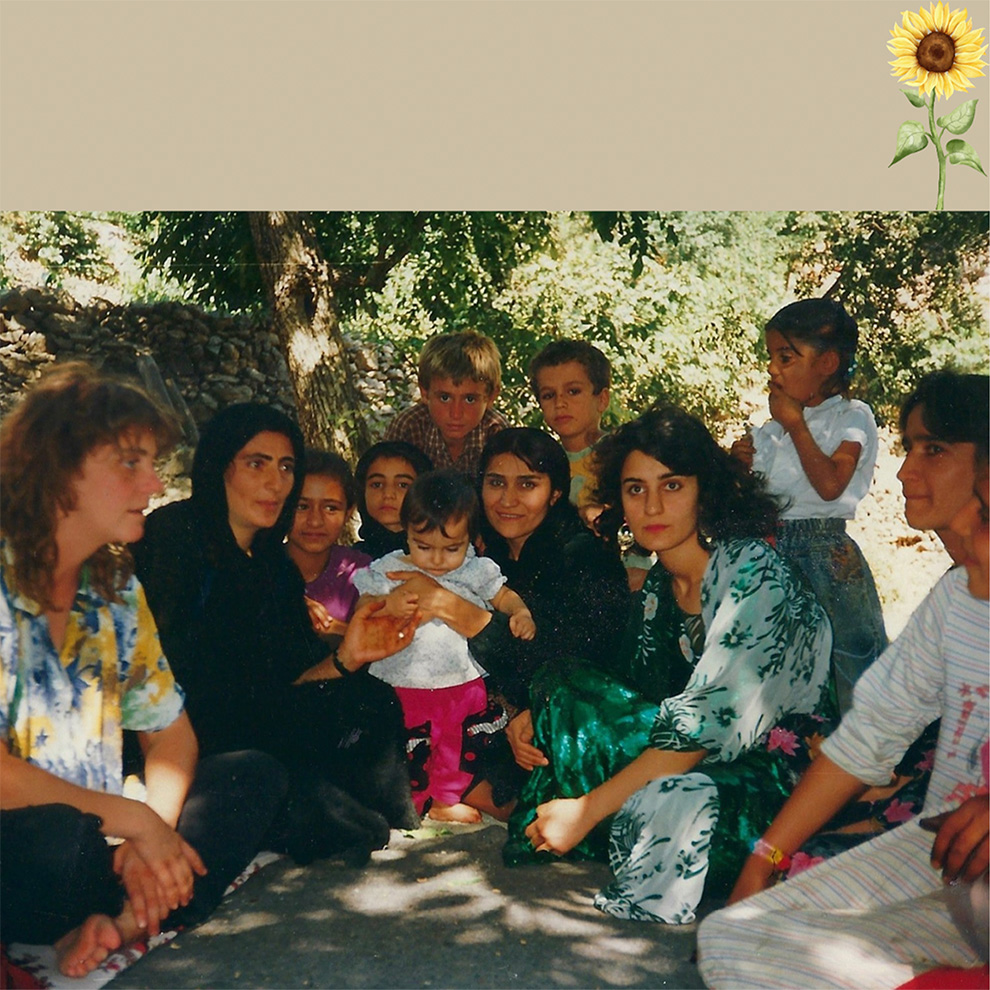
In 1995, the Kurdistan Region is politically isolated and deeply scarred by decades of persecution, war and destruction. This was preceded by decades of terror and persecution of Kurdish autonomy efforts by the Ba’ath regime, culminating in the 1988 poison gas attack on Halabja and the Anfal operations. As a result of the second Gulf War, millions of Kurds were forced to flee in 1991. The region was in ruins.
International aid initially focussed on emergency aid and reconstruction, but this slowed considerably from the mid-1990s onwards.
Against this backdrop, HAUKARI e.V. was founded to carry out public relations work independently of geopolitical interests, build civil society structures and strengthen local initiatives. The focus was on promoting women’s education, preventative healthcare and psychosocial support for survivors of violence.
1996
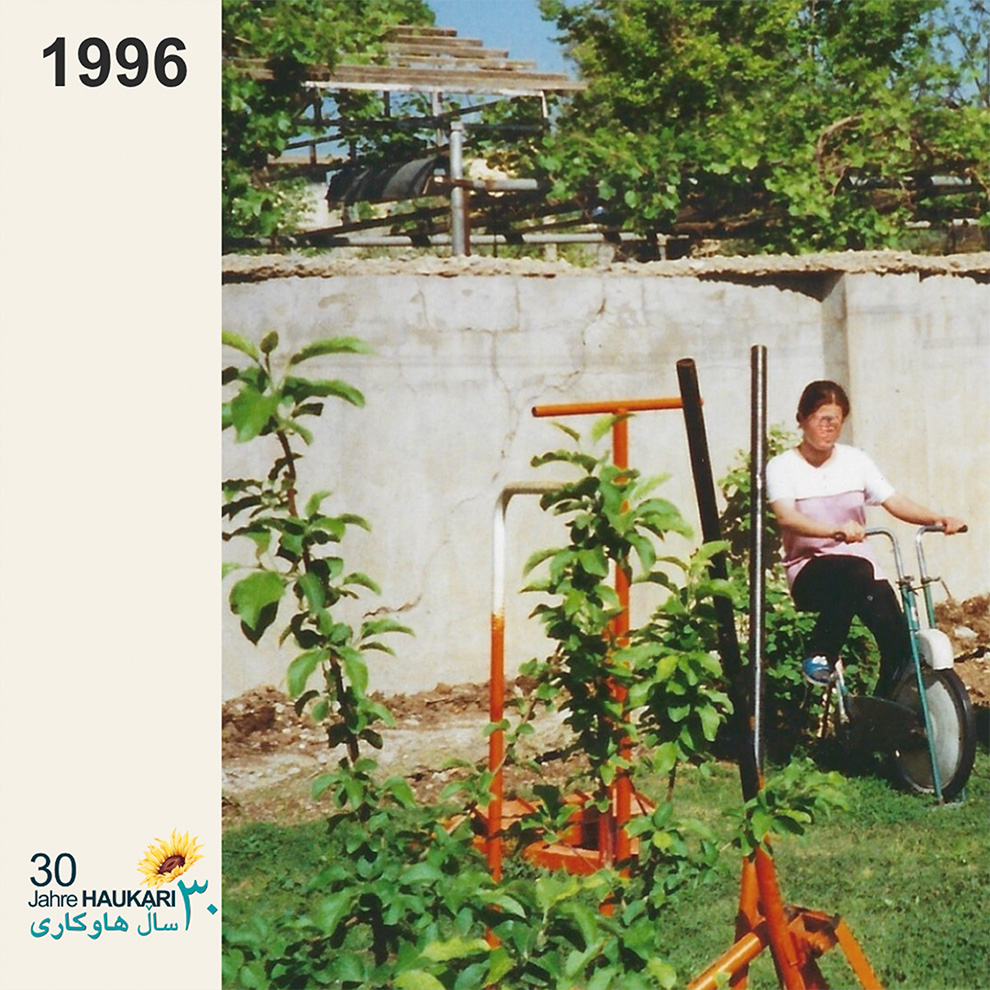
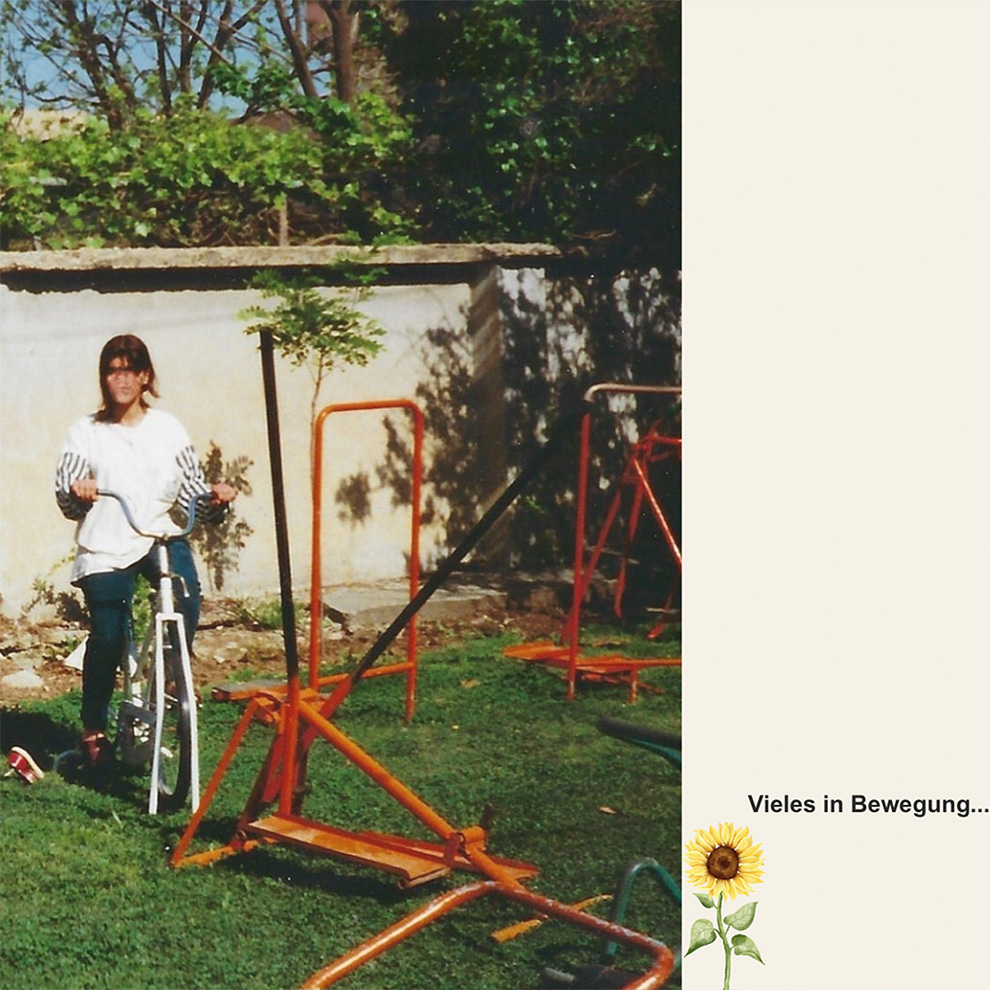
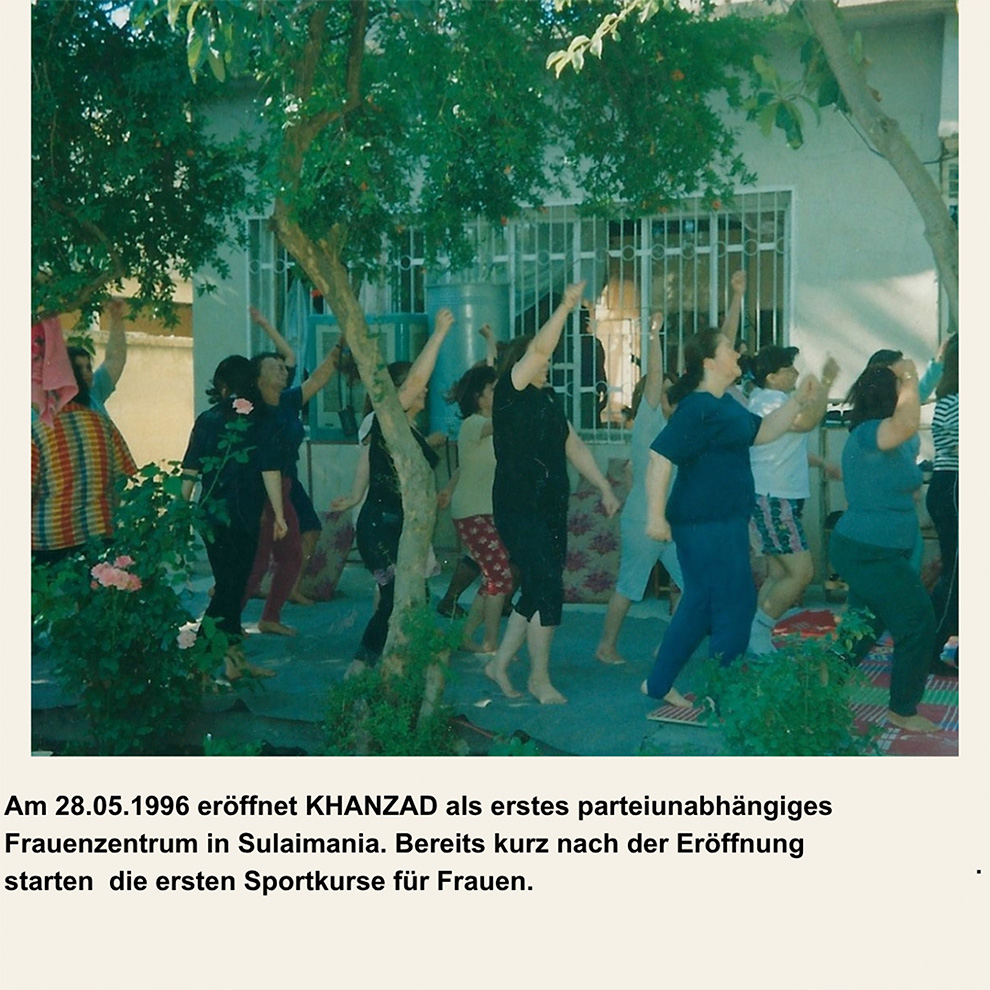
A lot is moving..
On 28.5.1996 KHANZAD opened- the first social and cultural women’s center in Sulaimania – a safe place for education, exchange and empowerment. Sport activities, courses, counseling and childcare were offered for all women. Since the very start, KHANZAD was run by a non-partisan women’s team and supported by HAUKARI e.V.
Besides offering place for education, exchange and empowerment of women, KHANZAD also from the outset acted as a starting point for social discussion about the situation of women in Kurdistan-Iraq, the political participation of women and gender-specific violence. KHANZAD has eversince continued to develop.
1997
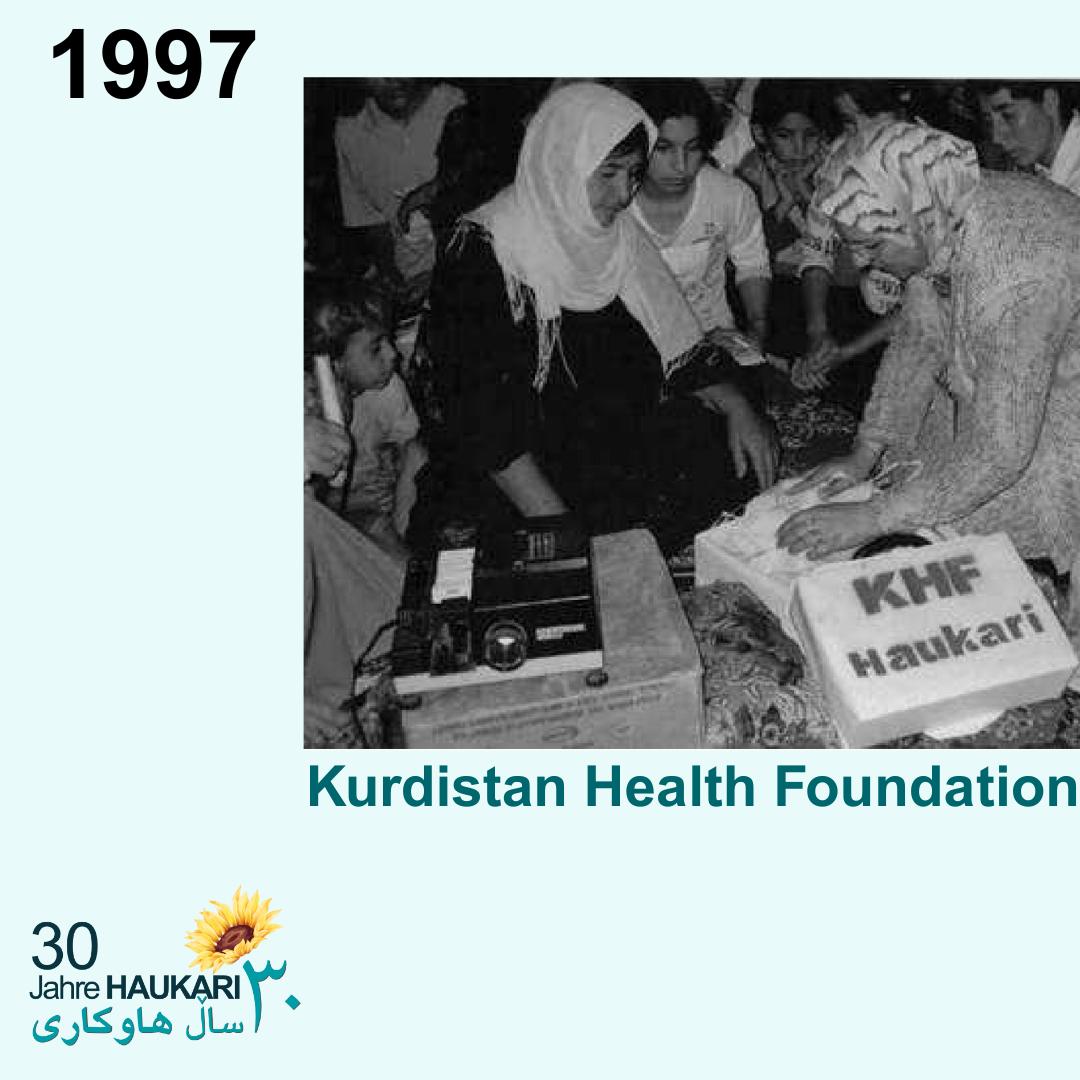
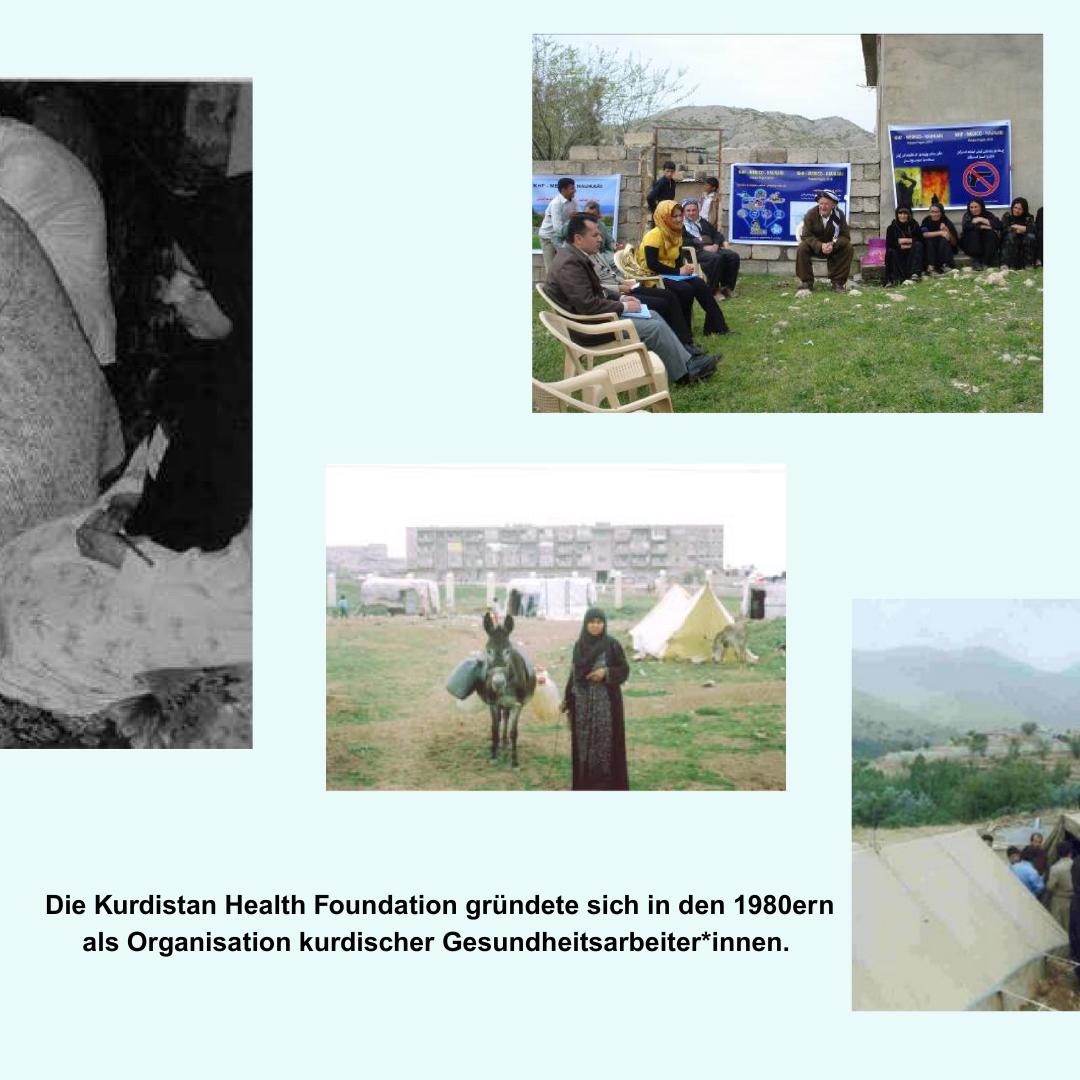
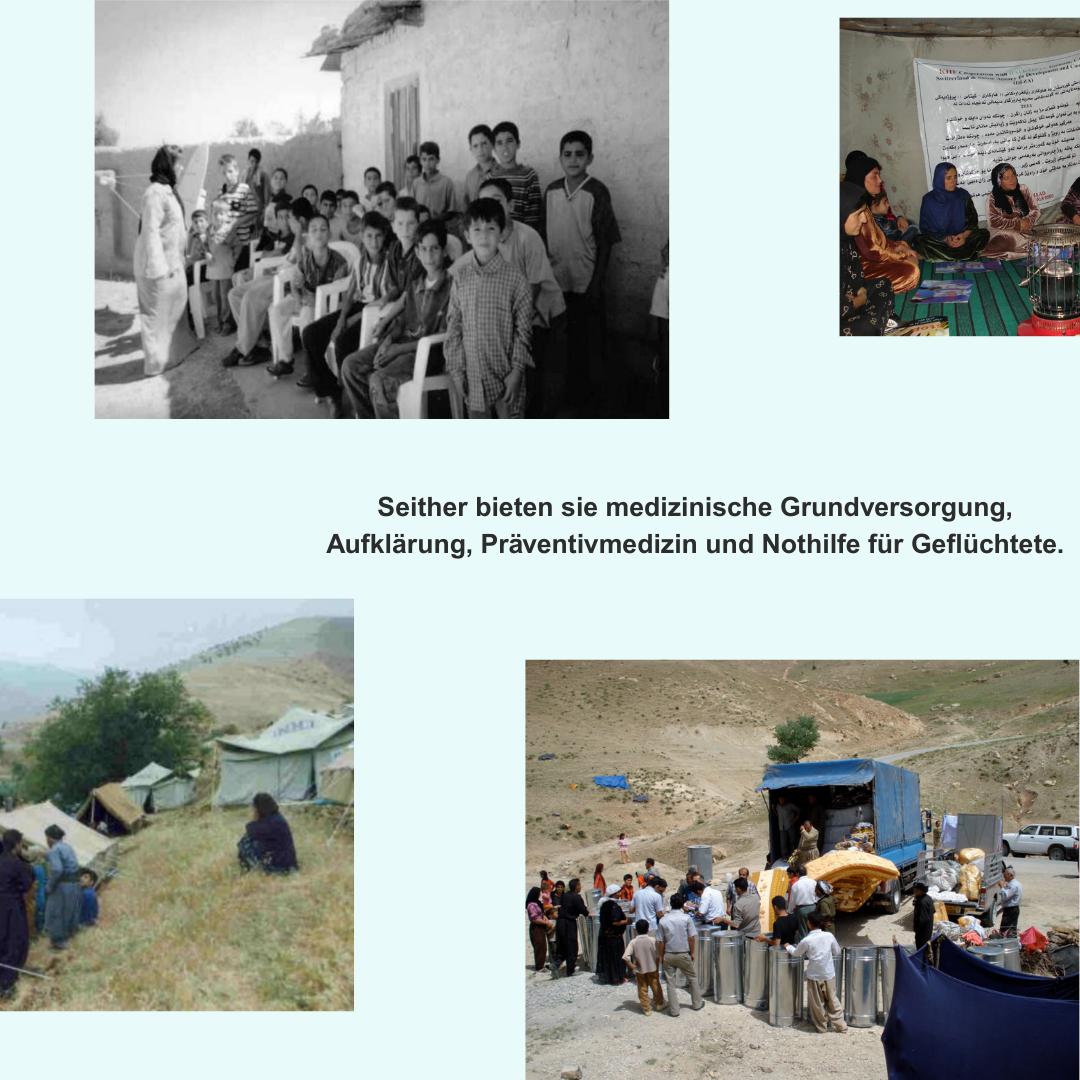
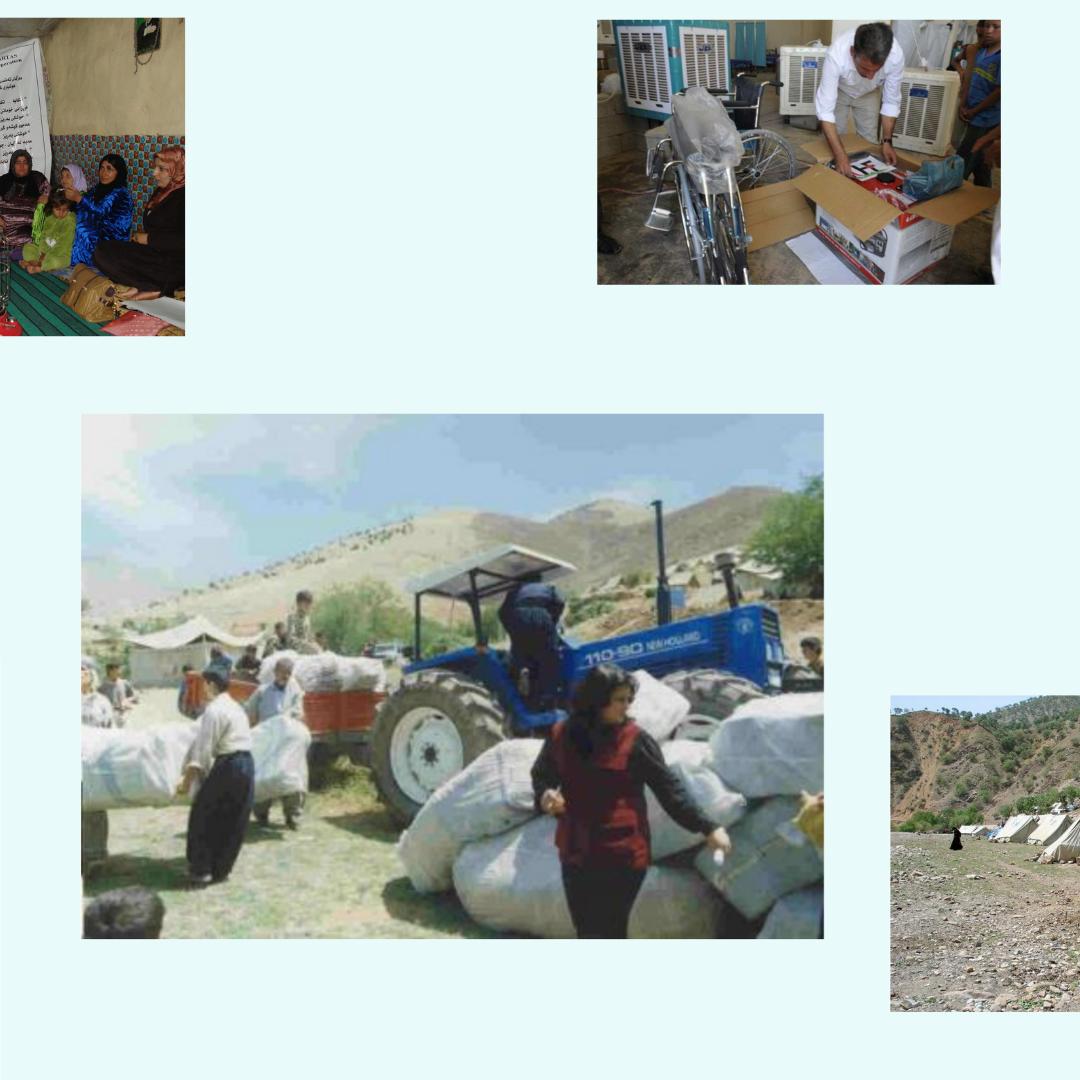
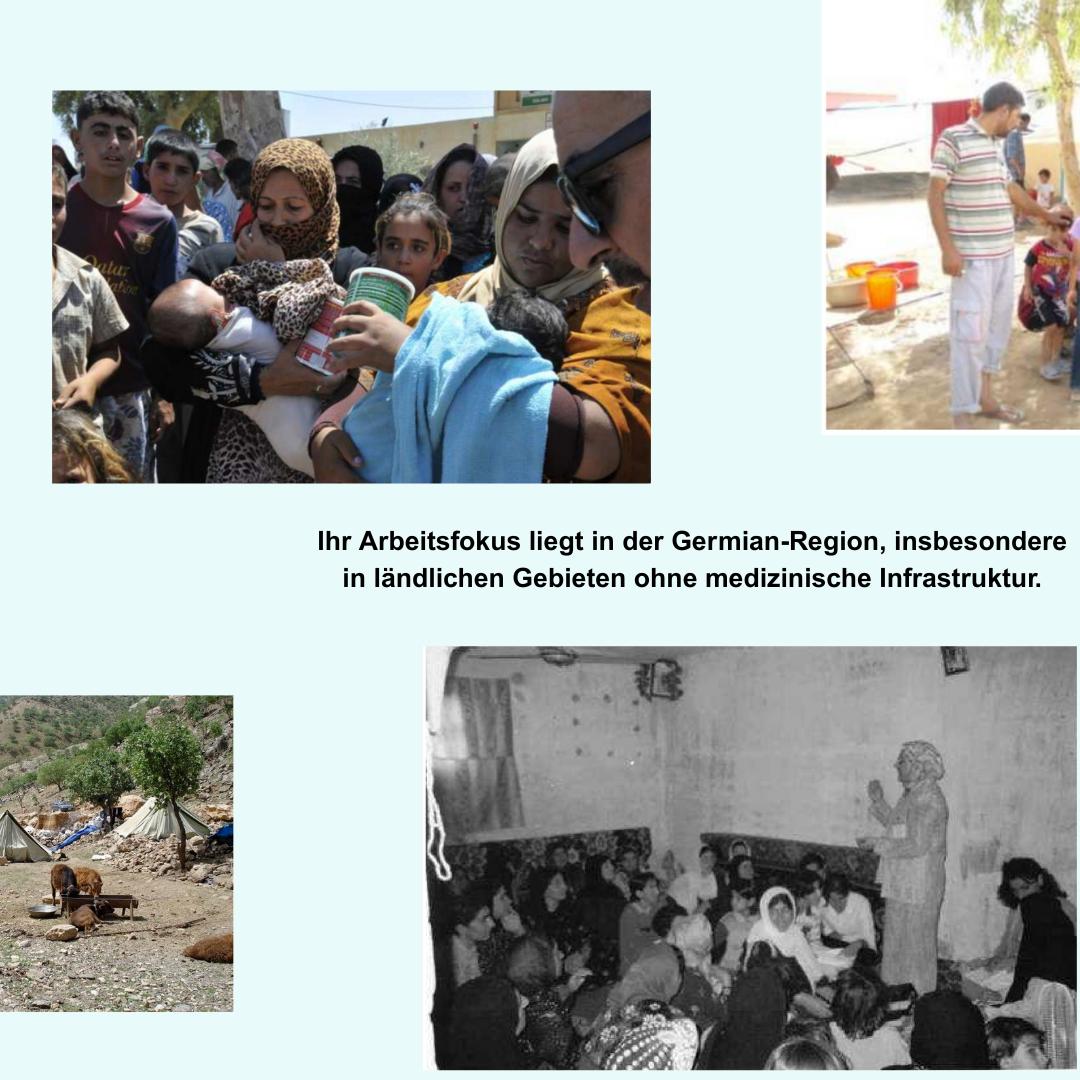
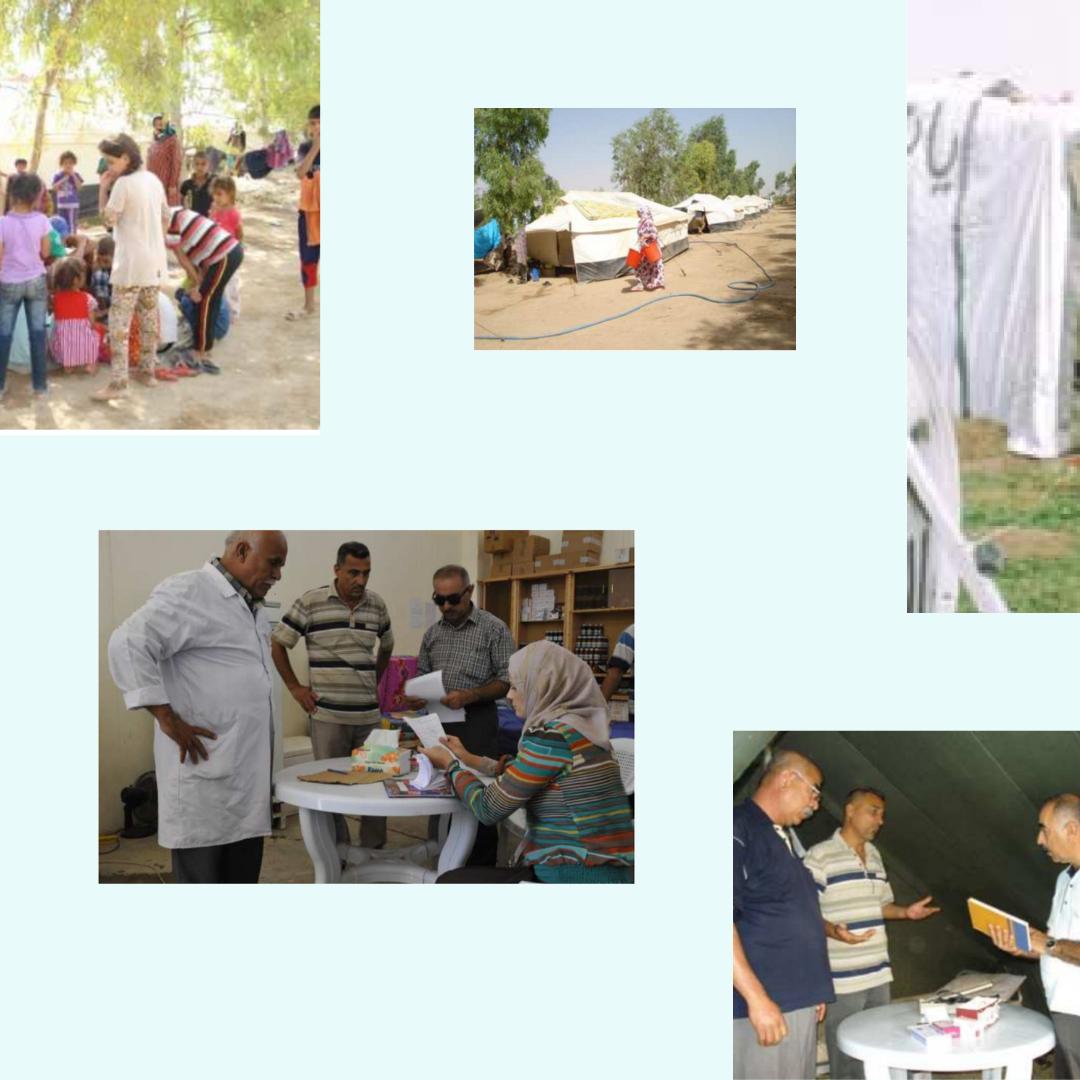
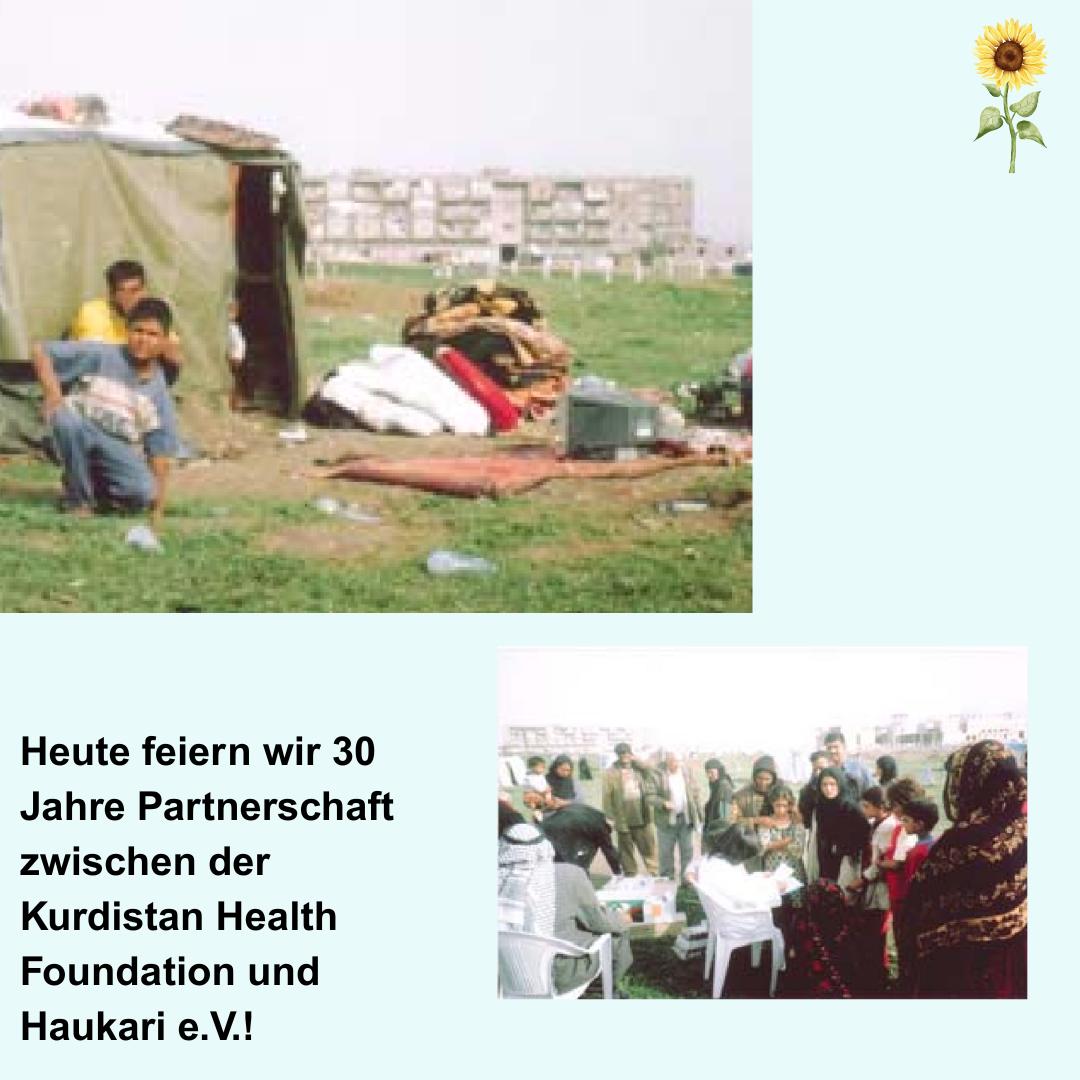
30 years of Partnership!
The Kurdistan Health Foundation (KHF) was founded in the 1980s as an organization of Kurdish healthcare workers. Since then, it has provided emergency aid for displaced people, basic medical care, health education and preventive medicine. Its work focuses on the Garmian region, particularly in rural areas lacking medical infrastructure.
We celebrate 30 years of cooperation between HAUKARI and the KHF!
1998
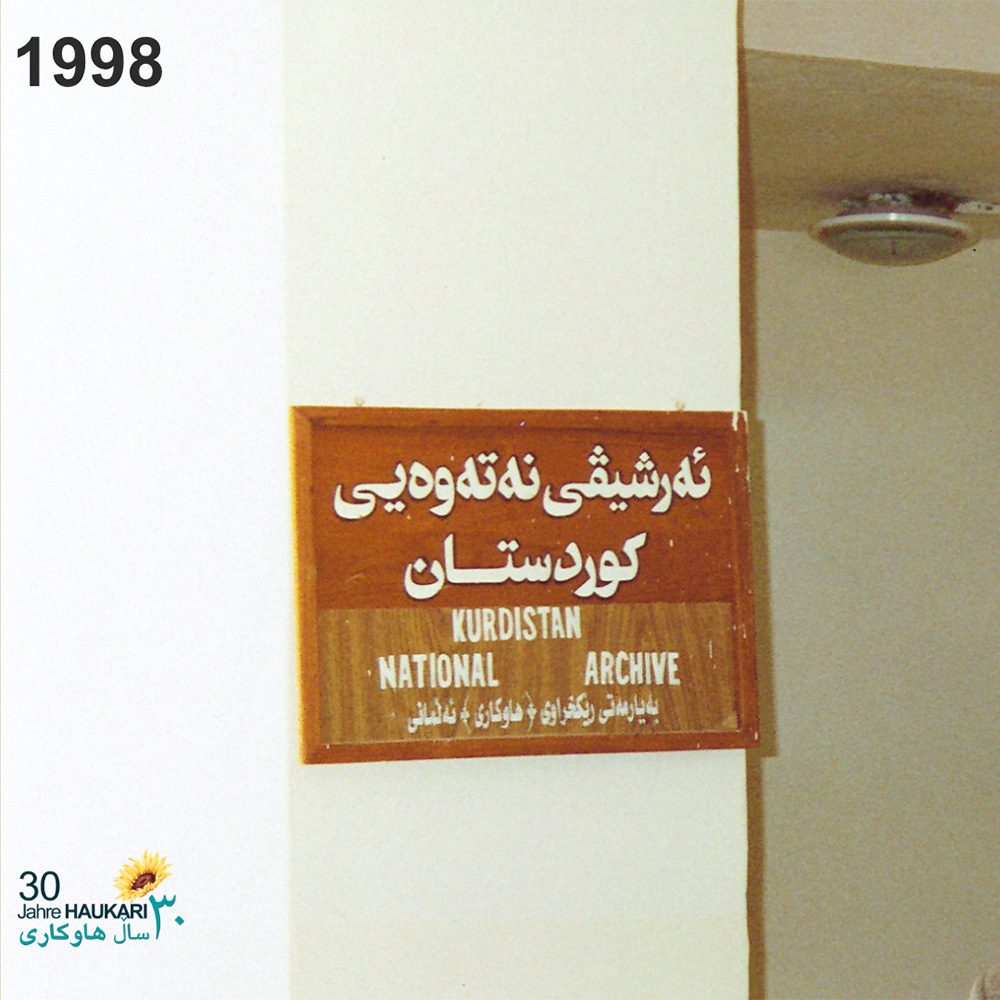
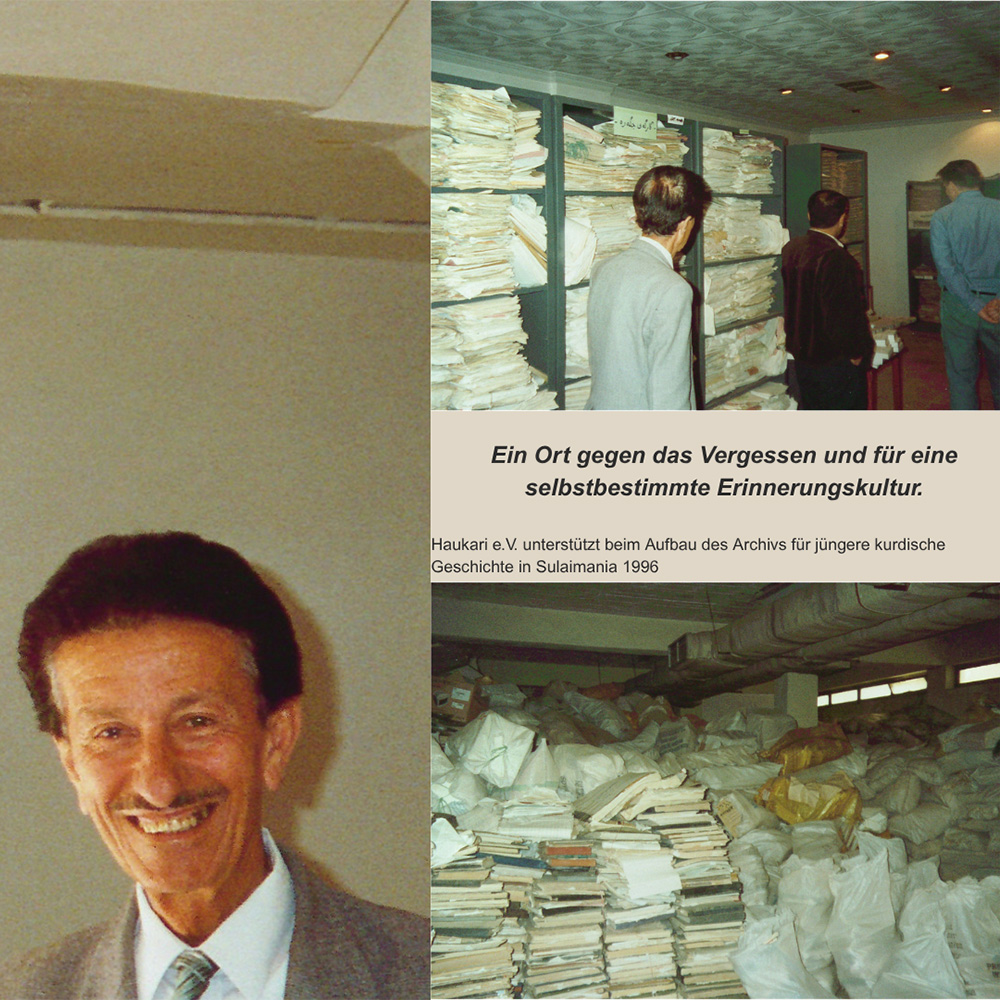
In 1998, HAUKARI supports the establishment of a historical archive on recent Kurdish history in Sulaimania. Among the many testimonies of memory are documents and voices that bear witness to the Anfal operations.
The archive becomes a place against forgetting and stands for a self-determined culture of remembrance.
1999
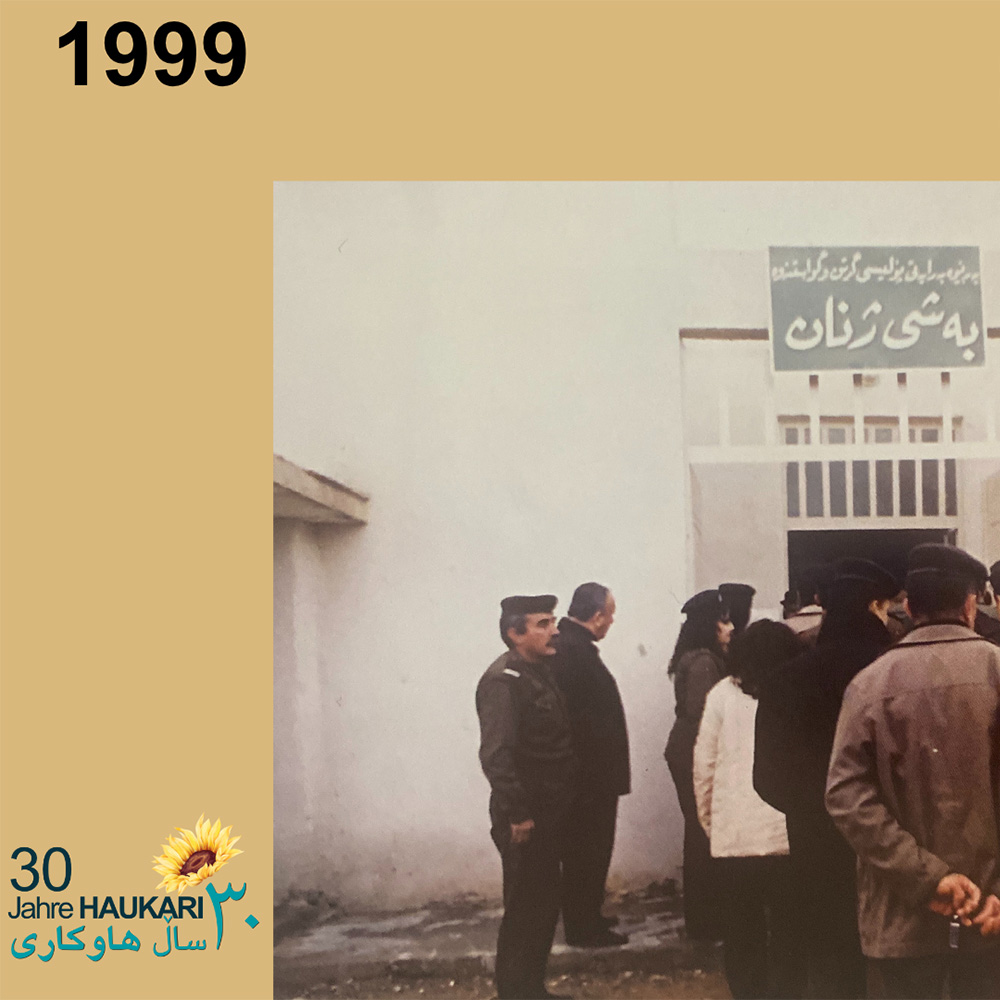

In 1999, KHANZAD began a new chapter by working in the women’s detention and transfer prison in Sulaimania- where female detainees were confined to a single room in the men’s section.
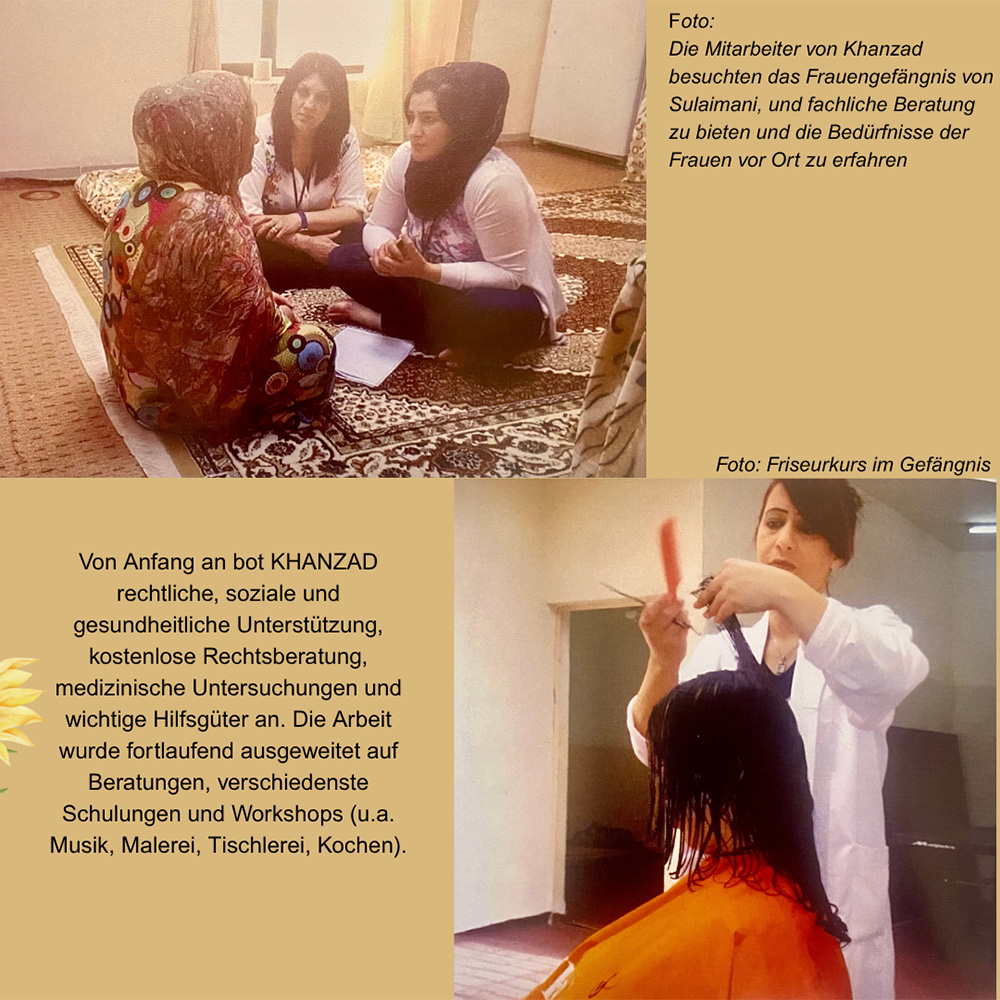
From day one, KHANZAD provided legal, social, and health support, free legal aid, medical checkups, and essential supplies. Seeing the harsh conditions, KHANZAD pushed the Kurdistan Regional Parliament and Ministry for change. In 2006, their efforts paid off: the women’s prison became a separate facility, fully staffed by women.
Similarly, Khanzad- with early support from NPA , followed by a long-standing partnership with Haukari e.V., KHANZAD started working in social correctional prisons, especially for women and juveniles, also extended its work to juvenile and women’s correctional facilities- offering counseling, skills training, and workshops (from music and painting to carpentry and cooking). An accelerated education program and a special meeting space for women inside the prison were also launched.
This work became a cornerstone in KHANZAD’s journey and impact and they are working to continue it to this day.
2000
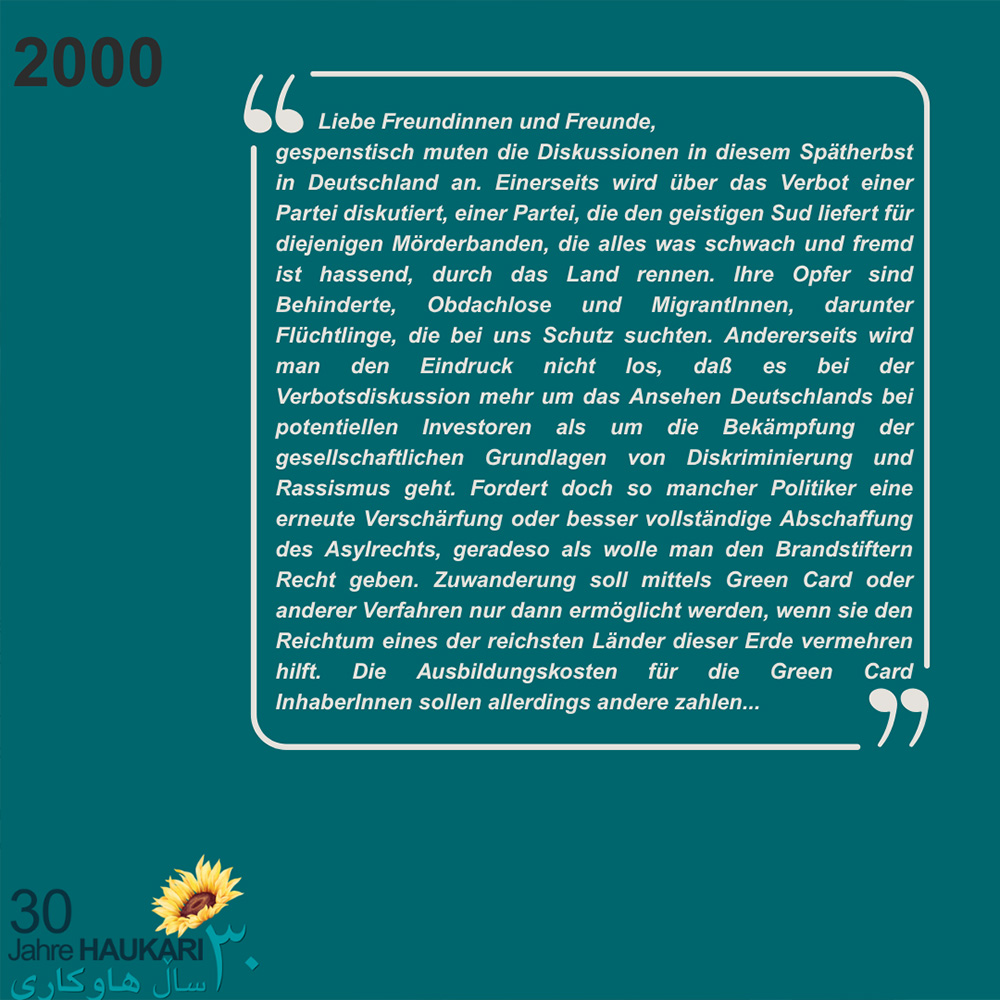
“Dear friends,
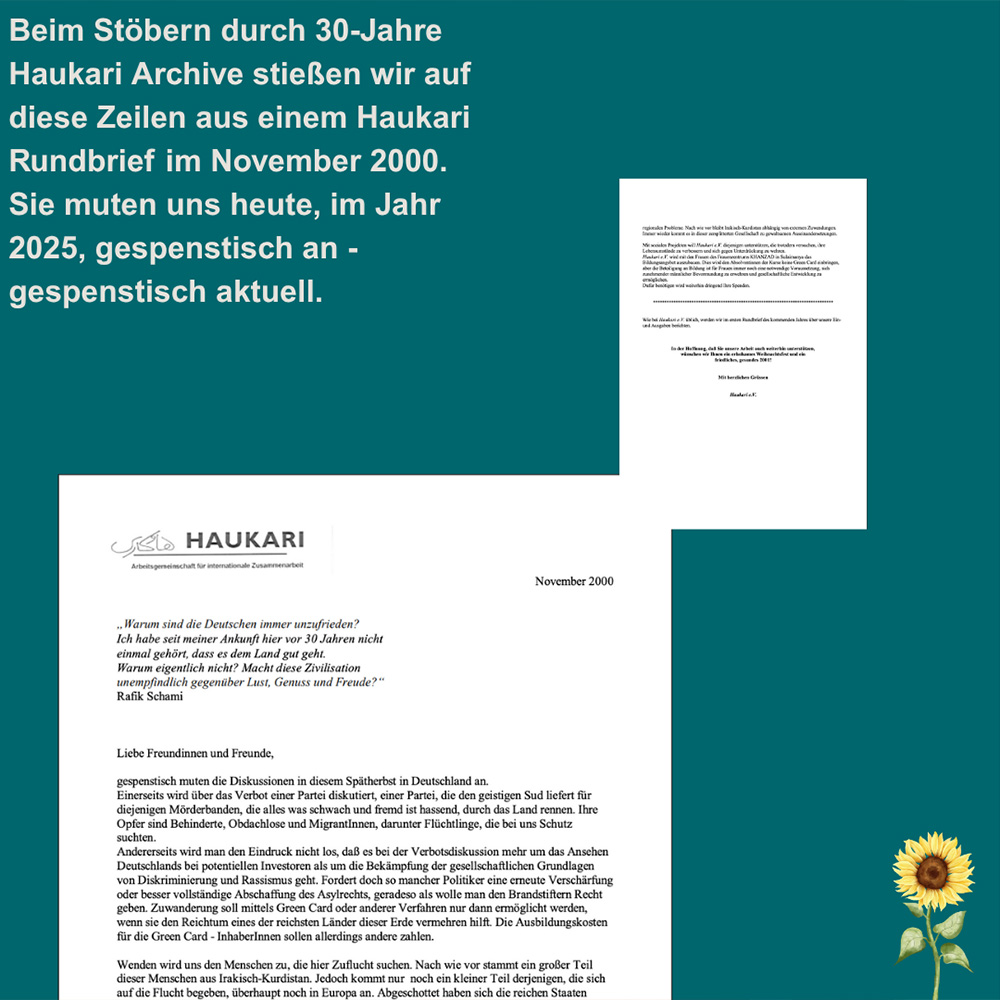
The discussions in Germany this late autumn seem eerie. On the one hand, there is talk of banning a party, a party that provides the intellectual fodder for those gangs of murderers who run through the country hating everything that is weak and foreign. Their victims are disabled people, homeless people and migrants, including refugees who sought protection here. On the other hand, one cannot shake the impression that the discussion about banning the party is more about Germany’s reputation among potential investors than about combating the social foundations of discrimination and racism. Many politicians are calling for a renewed tightening or, better yet, complete abolition of the right to asylum, as if they wanted to prove the arsonists right. Immigration should only be allowed by means of green cards or other procedures if it helps to increase the wealth of one of the richest countries on earth. However, the training costs for green card holders should be paid by others…”
While rummaging through 30 years of Haukari archives, we came across these lines from a Haukari newsletter in November 2000. Today, in 2025, they seem eerily familiar – eerily relevant.
2001
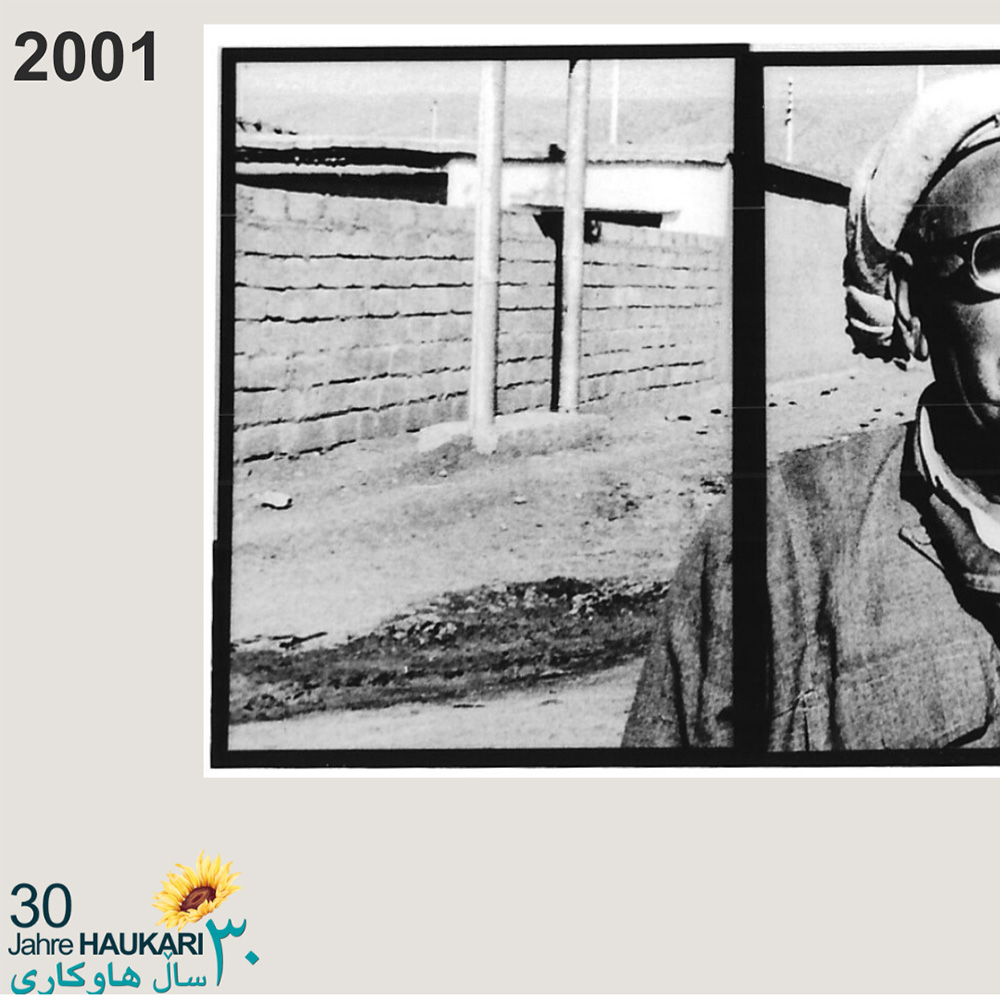
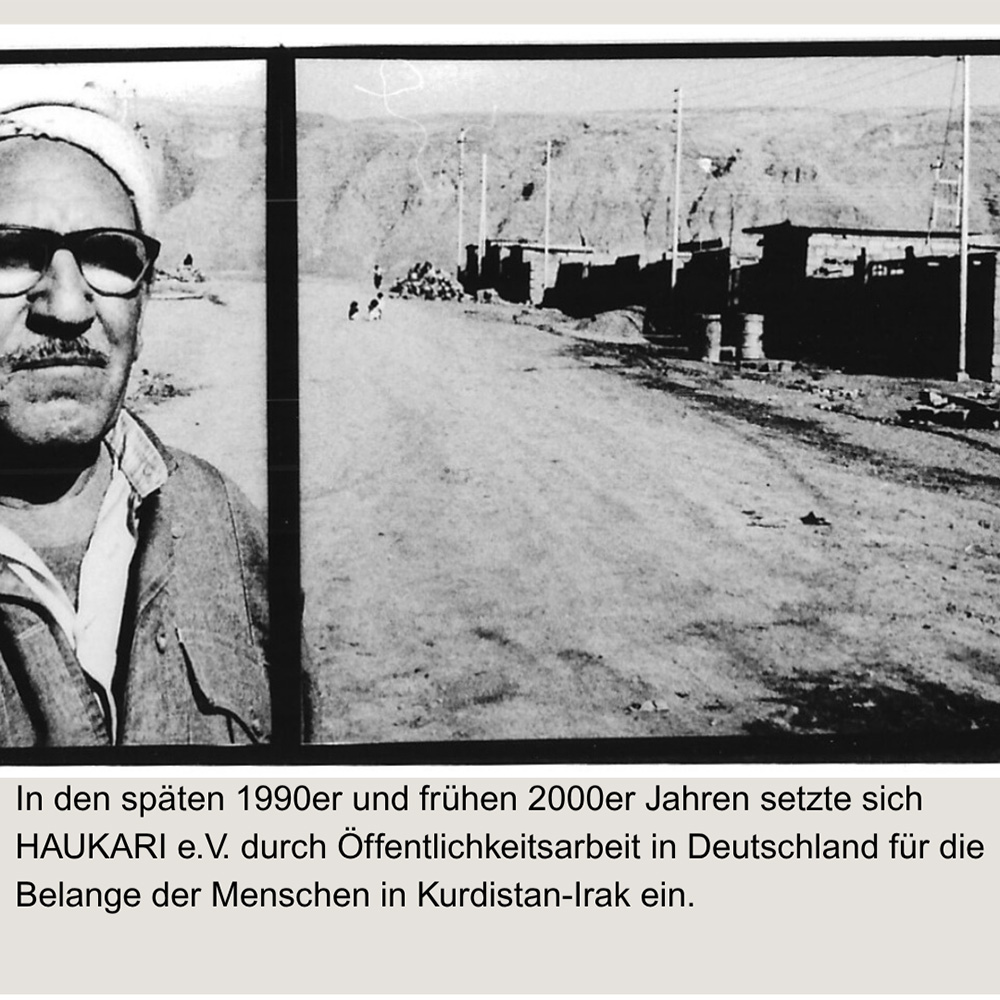
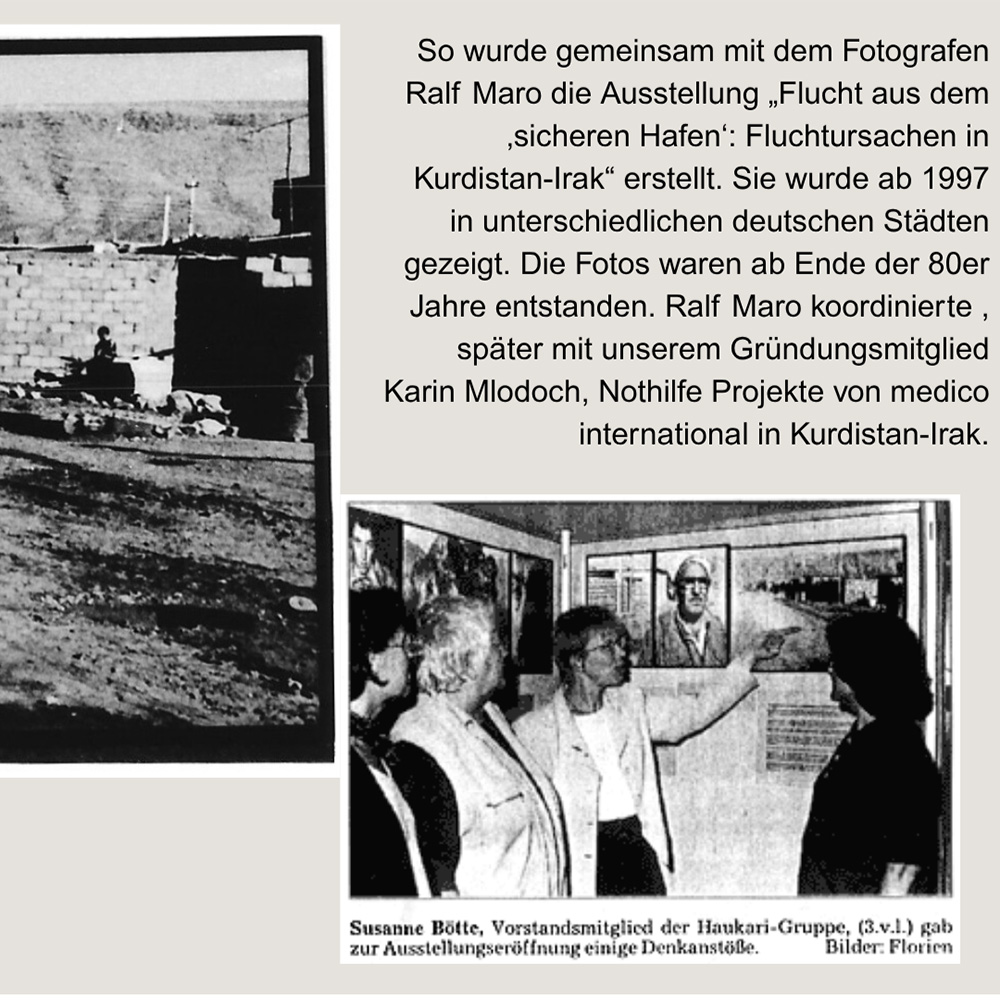
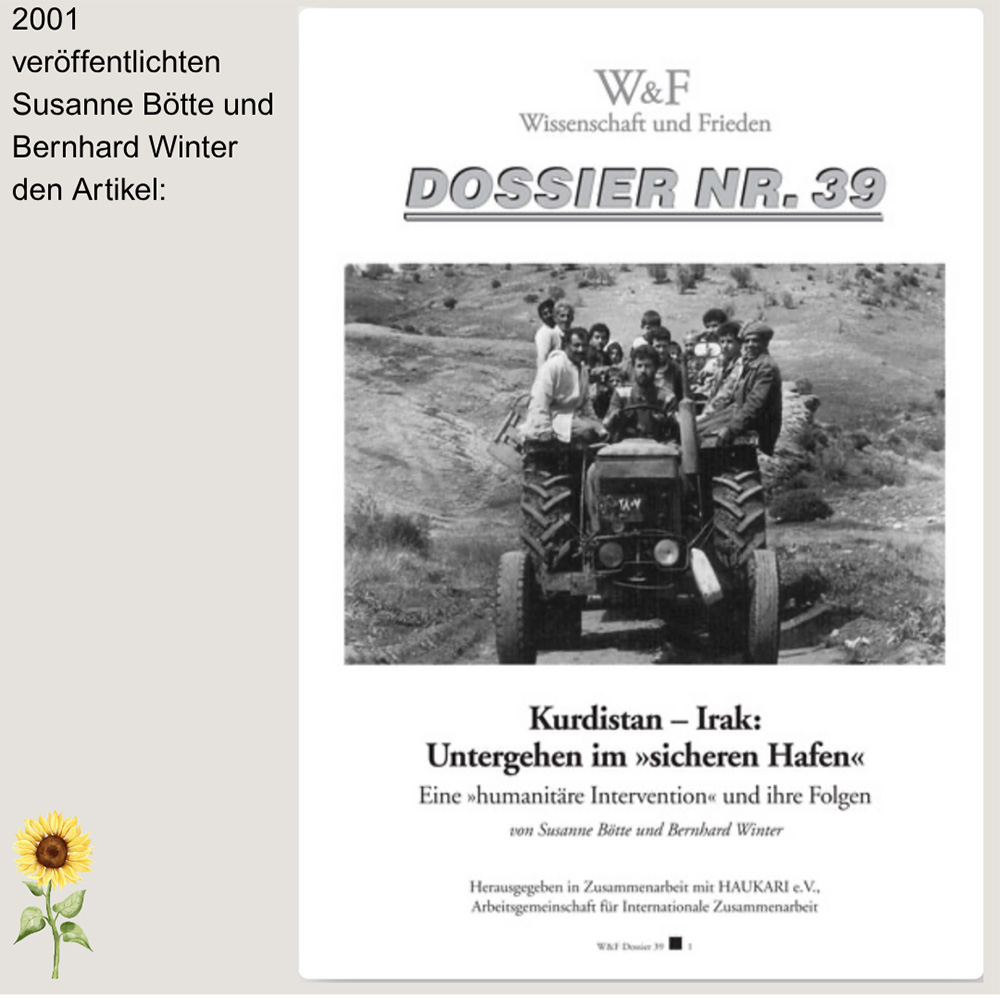
In the late 1990s and early 2000s, HAUKARI e.V. campaigned for the interests of the people of Kurdistan-Iraq through public relations work in Germany. Together with photographer Ralf Maro, they created the exhibition ‘Escape from the “safe haven”: Causes of flight in Kurdistan-Iraq’. It was shown in various German cities from 1997 onwards. The photos were taken from the late 1980s onwards. Ralf Maro coordinated emergency aid projects by medico international in Kurdistan-Iraq, later together with our founding member Karin Mlodoch. In 2001, Susanne Bötte and Bernhard Winter published the article: “Kurdistan-Iraq: Perishing in a safe haven
A “humanitarian intervention” and its consequences”.
2002
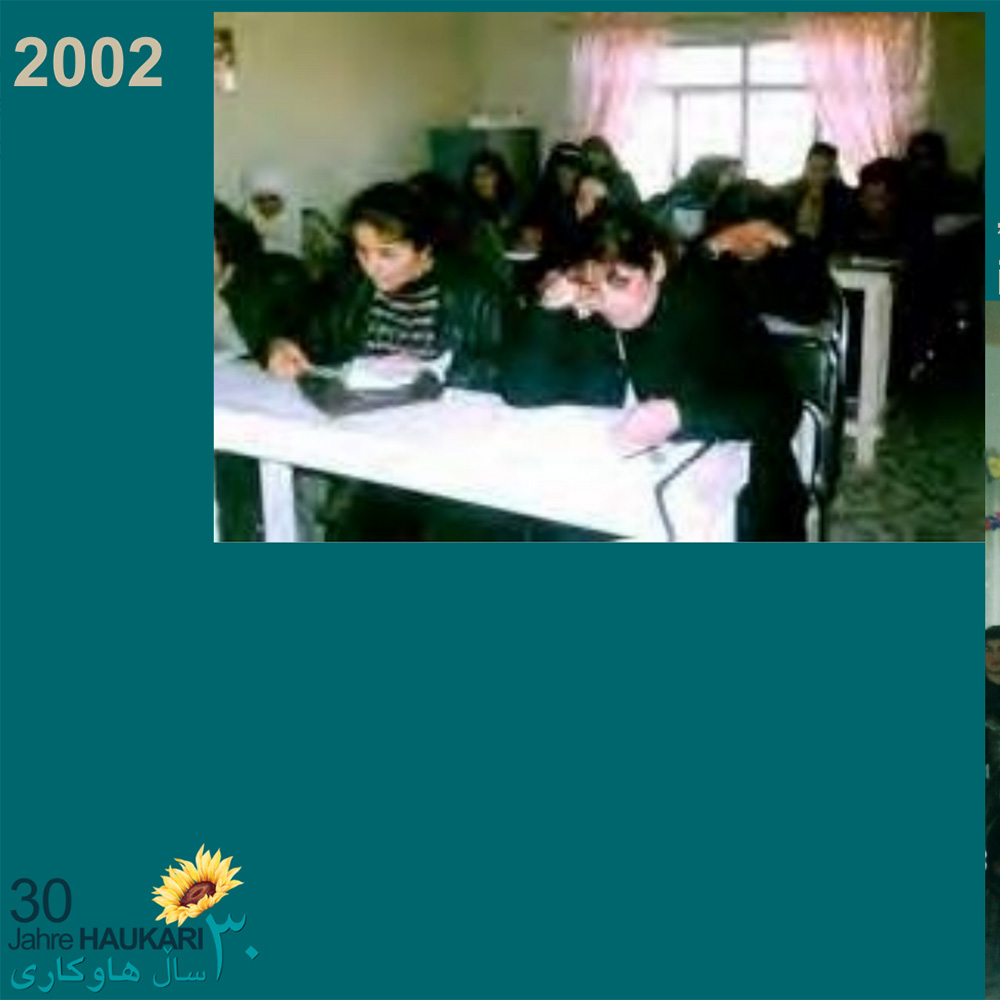
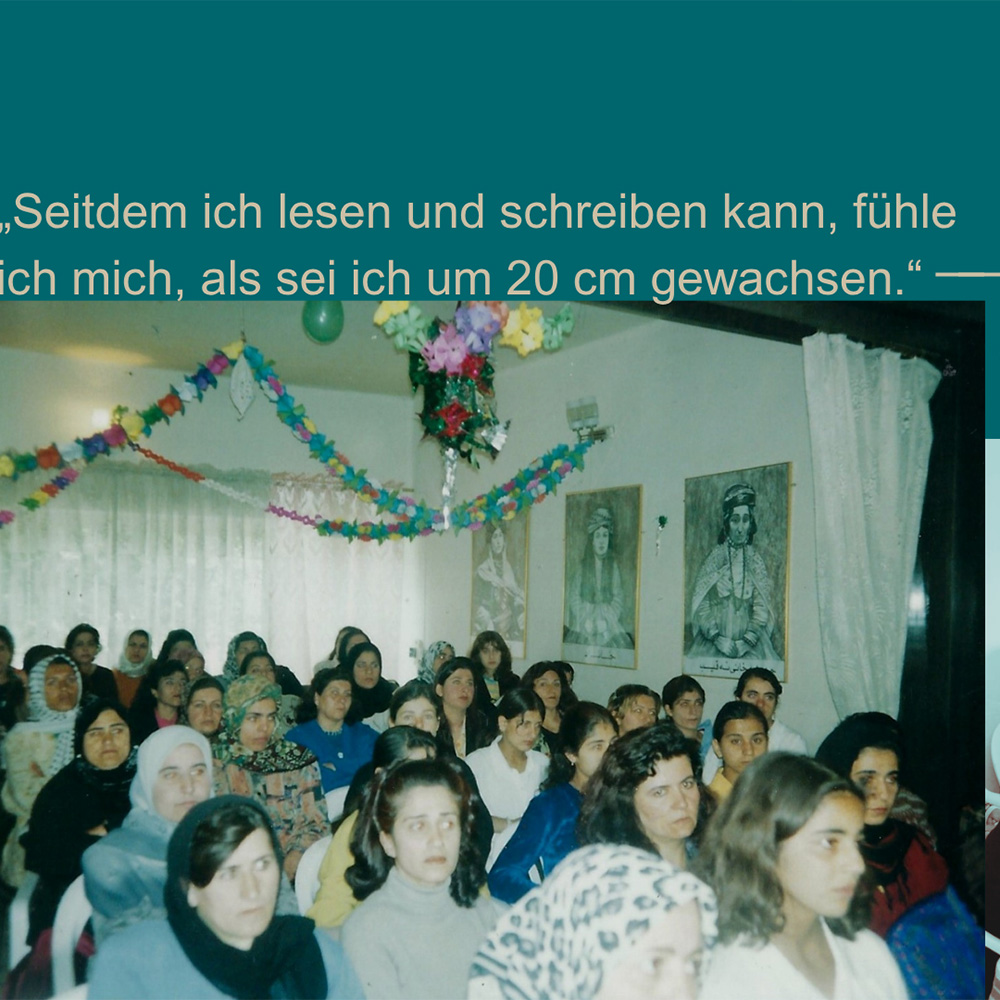
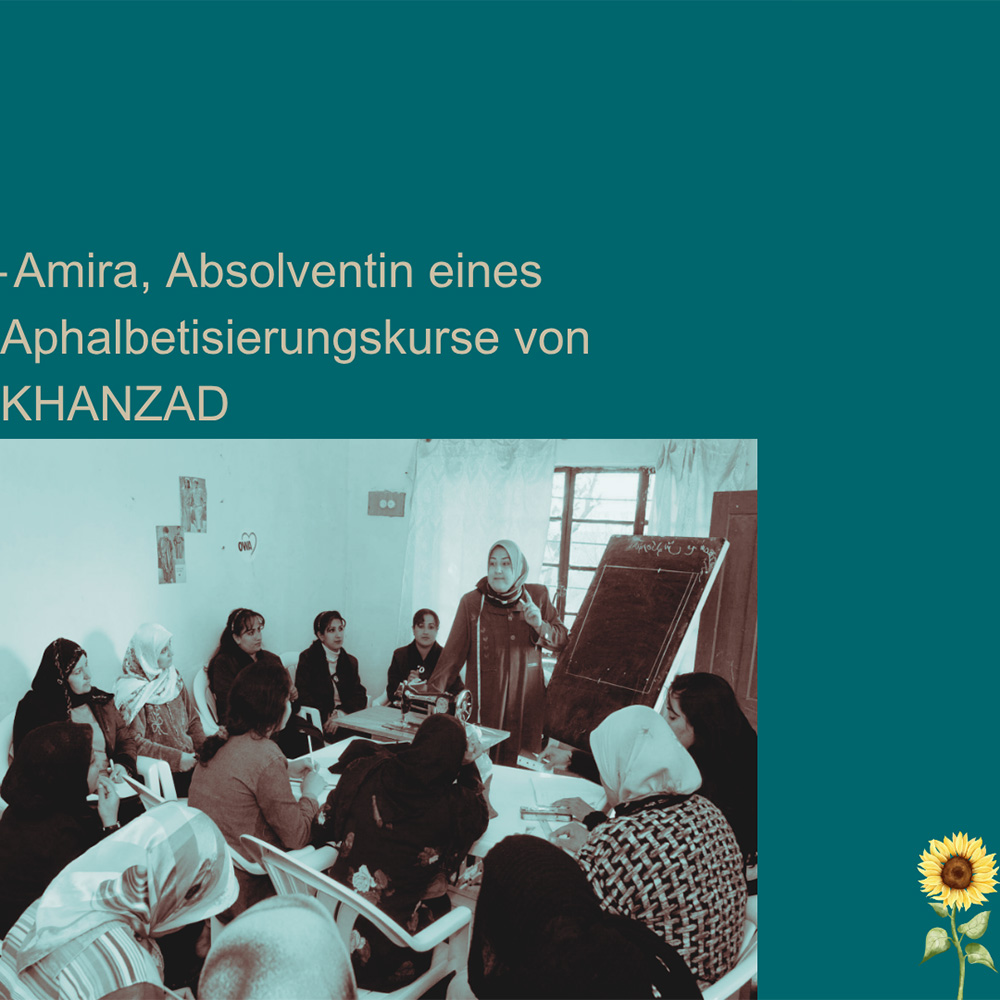
‘Since I learned to read and write, I feel like I’ve grown 20 cm taller.’
-Amira, graduate of a literacy course run by KHANZAD
2003
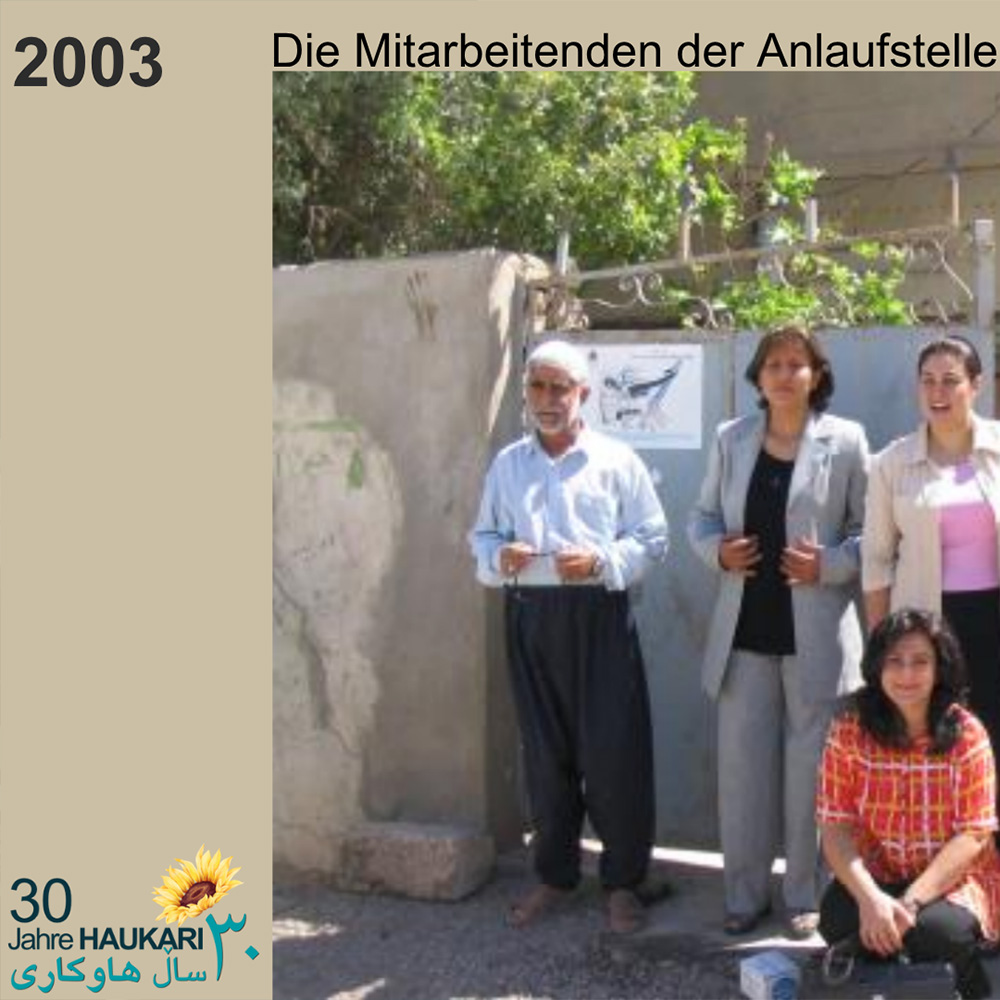
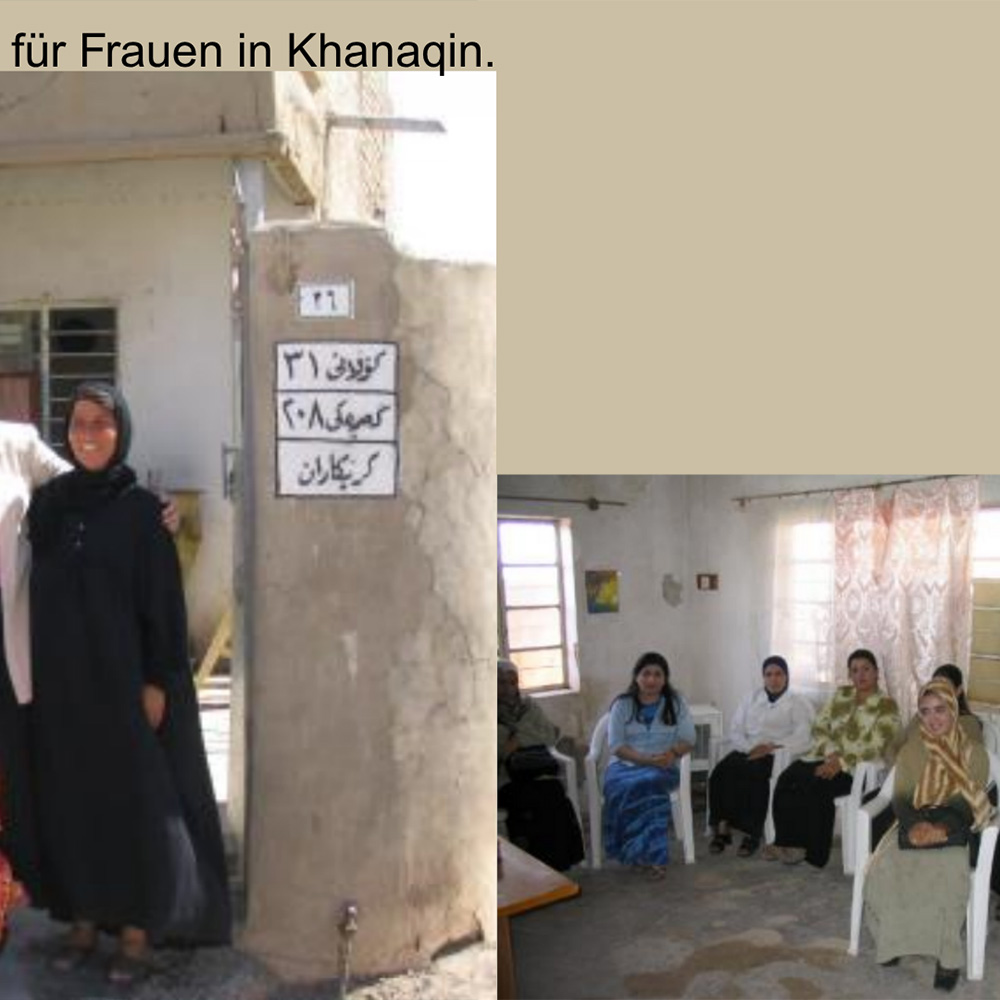
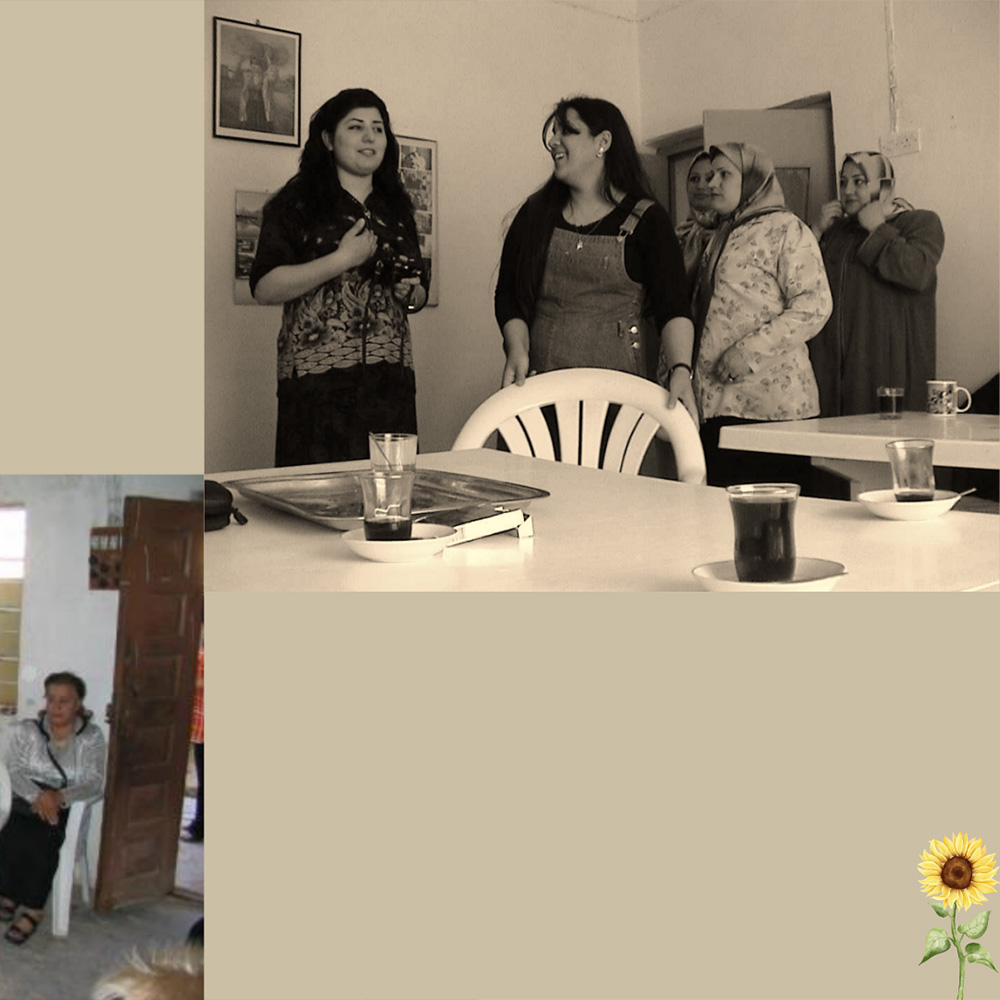
The multi-ethnic and multi-religious city of Khanaqin had suffered decades of political violence, infrastructural and economic neglect, and Arabisation policies under the Baʿath regime. With the fall of the regime in 2003, numerous social, economic and political challenges arose. One of the consequences of the conflict-ridden situation and economic hardship was increased violence against women within families. In this situation, the KHANZAD team from Sulaimania initially provided support to women with legal, psychological, health and family problems through mobile counselling teams and later also through a contact point in Khanaqin. The team consisted of Turkmen, Kurdish and Arab lawyers, nurses, social scientists and social workers.
2004
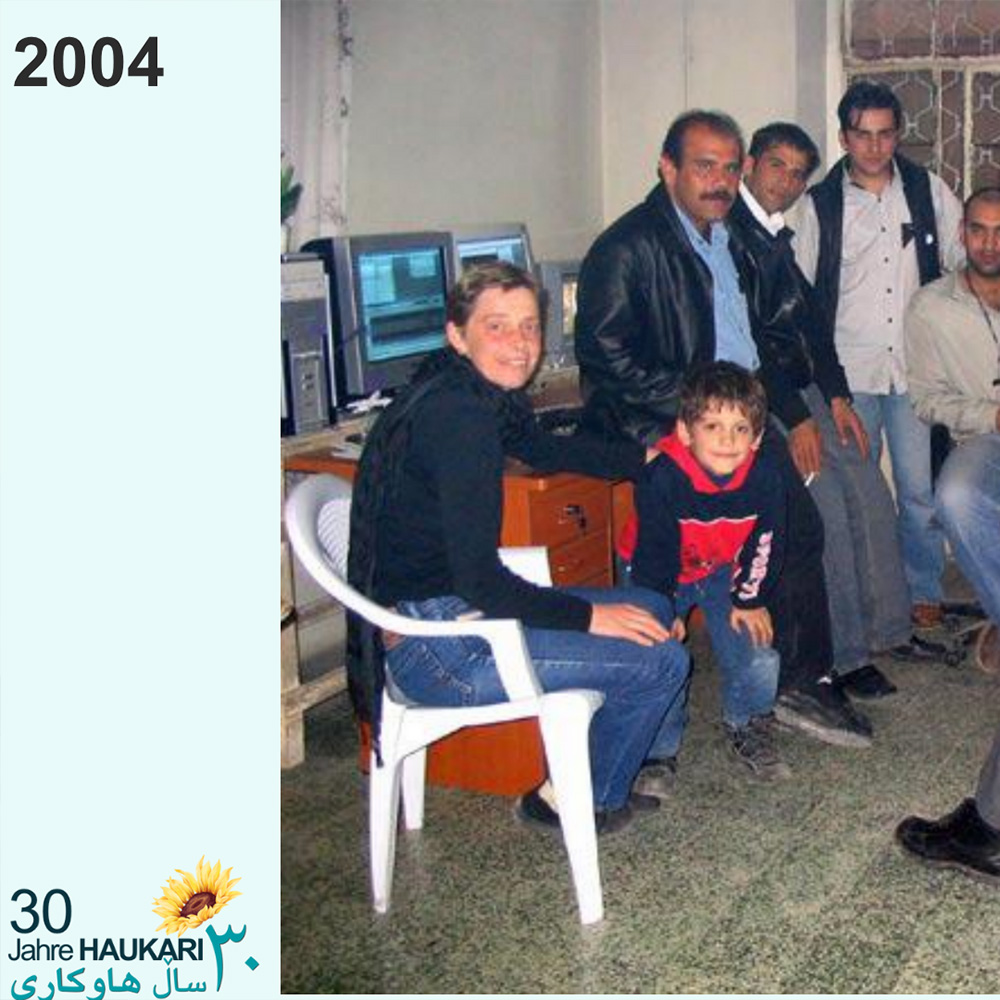
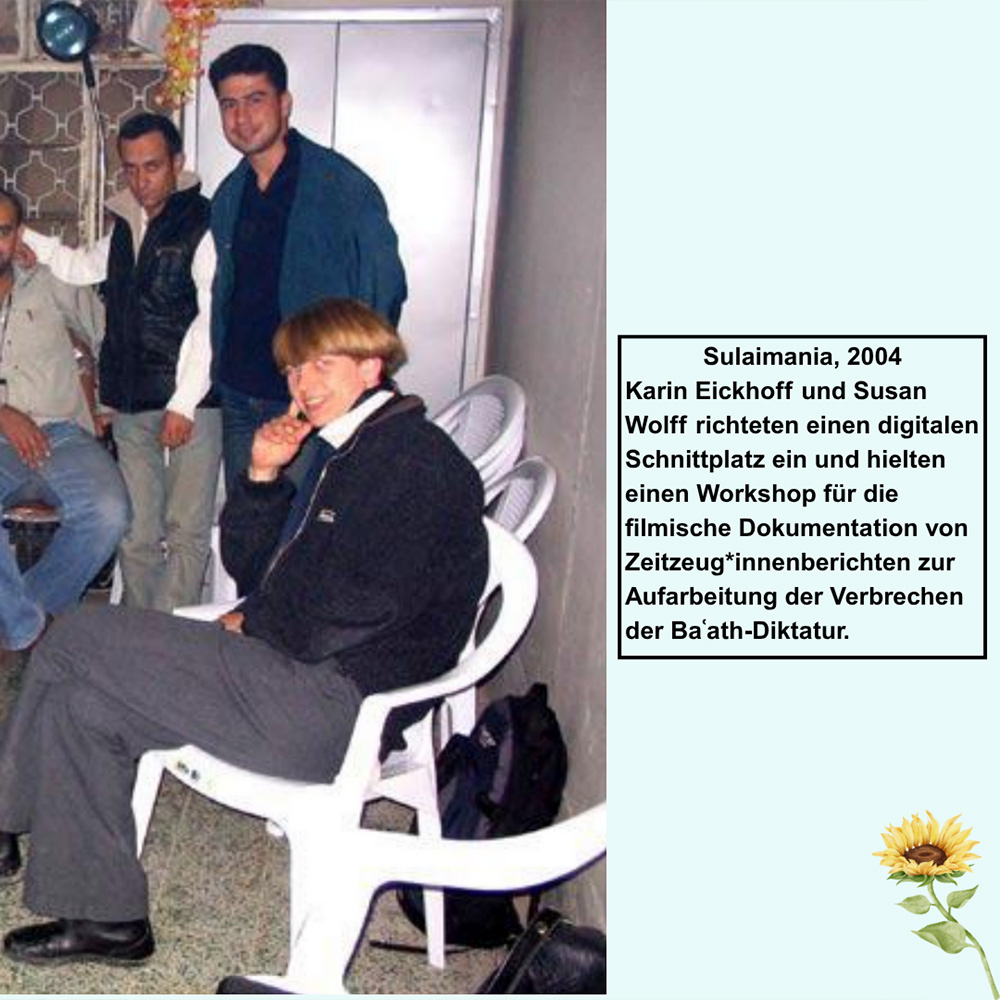
STORIES IN MOTION
In April 2004, Karin Eickhoff and Susan Wolff traveled to Sulaimania on behalf of Haukari e.V. to set up a digital video editing suite and conduct a one-week technical workshop. This was part of a project aimed at supporting survivors of the Ba’ath dictatorship. One of the project’s goals was to document eyewitness accounts on film as a significant contribution to remembrance and dealing with the past. The challenges on the ground were real: the editing suite was built using imported hardware and donated software, and a generator on the roof provided the necessary power supply. Karin and Susan brought their expertise as a computer technician and film editor into an intensive exchange on technical issues. The fact that the workshop was led by two women was not only readily accepted by participants from the start, but also sparked engaging conversations about gender roles in technical professions—both in Europe and in Iraq. Film and video have been an essential part of Haukari’s work from the very beginning. A selection of films produced over the past 30 years can be found in the media library on our website.
2005
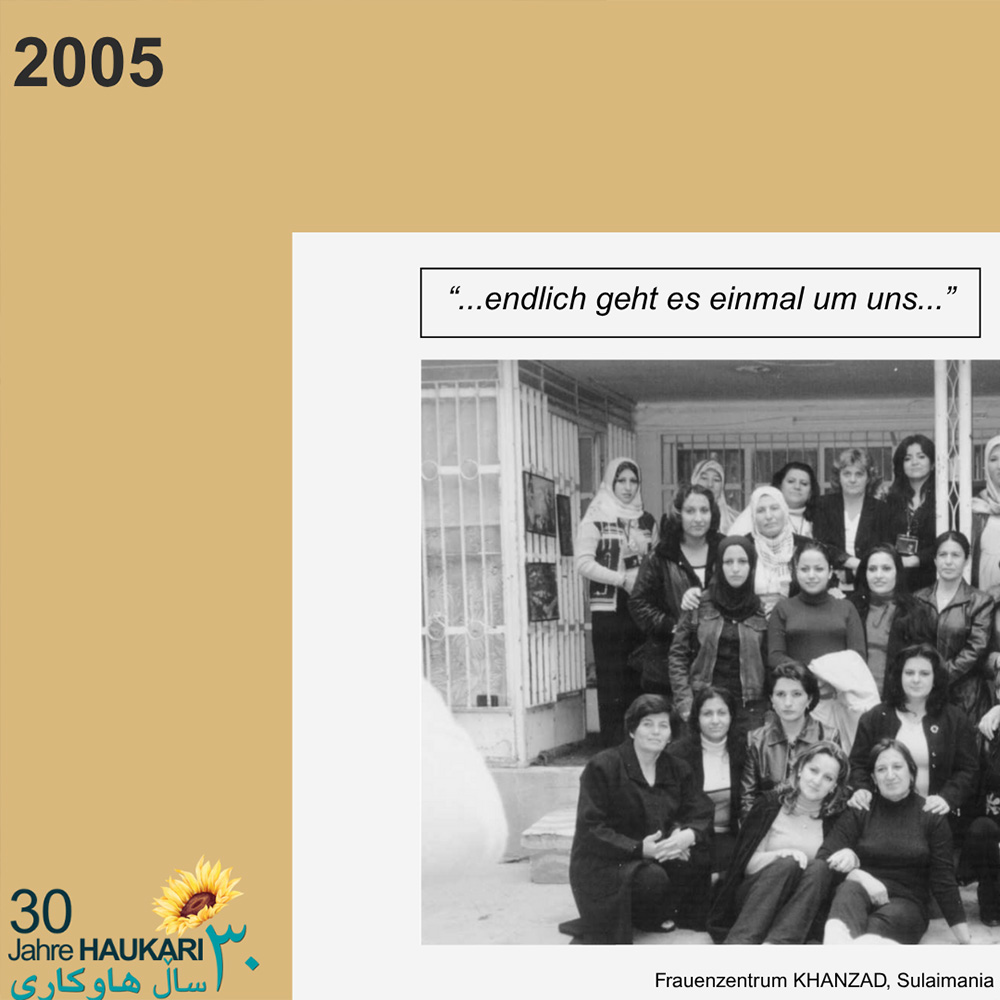
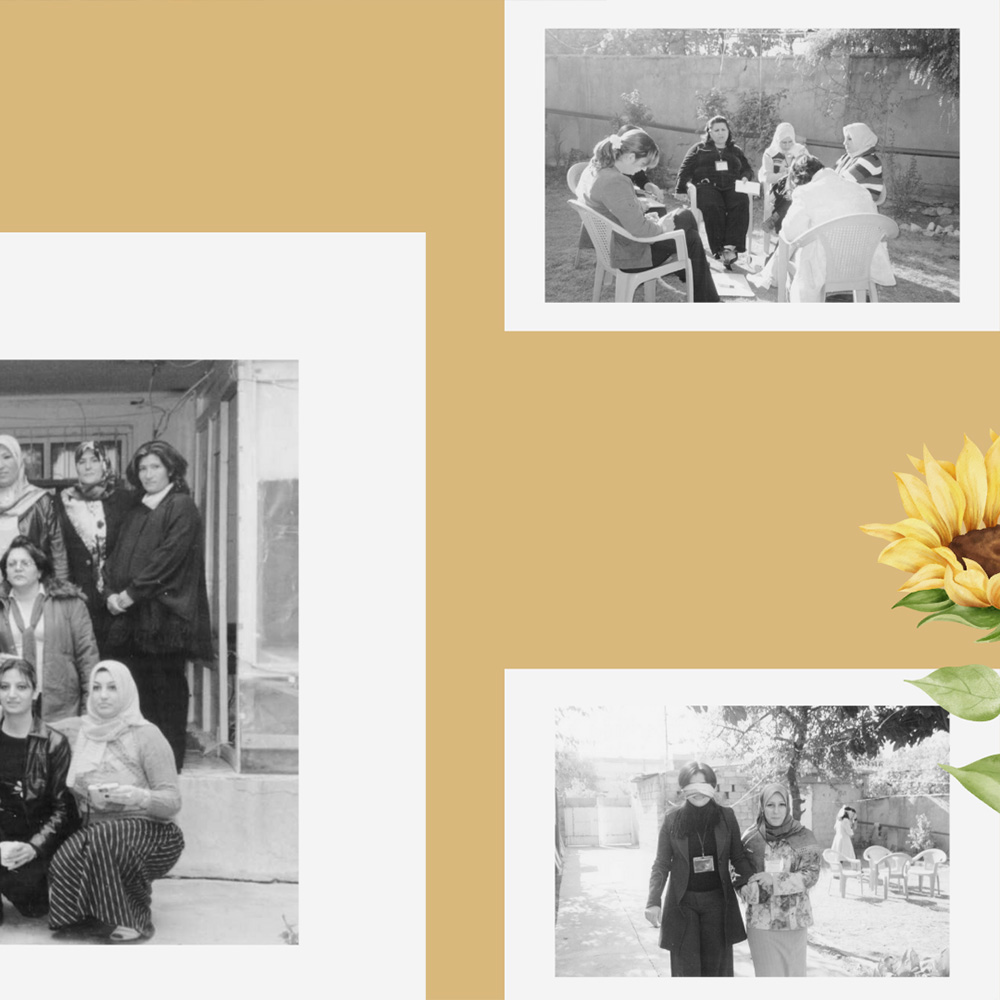
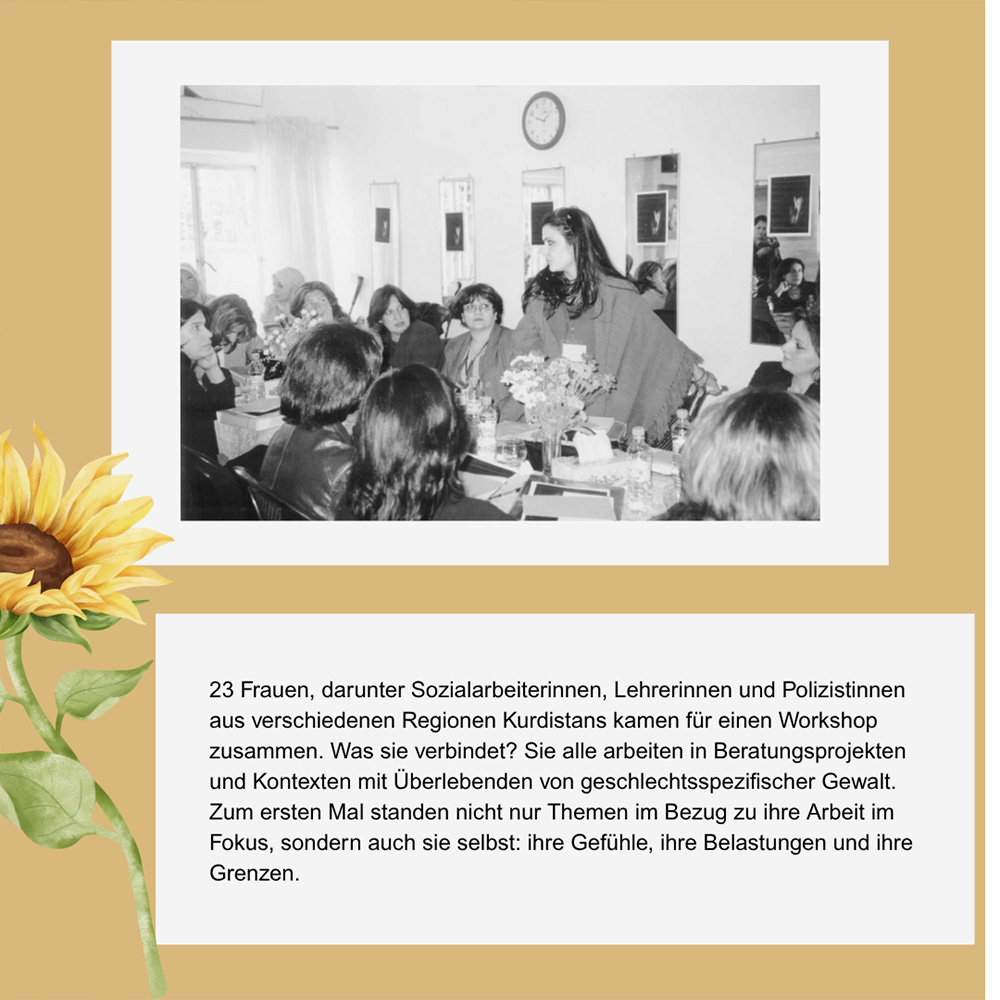
“Finally, it’s about us”
At the KHANZAD Women’s Center in Sulaimania, a workshop for 23 women working in counseling projects for female survivors of violence was held. The participants came from various regions of northern and central Iraq, including social workers, teachers, and police officers from Tuz Khurmatu, Erbil, Dohuk, Halabja, and Rawanduz. The workshop was part of a training program initiated by HAUKARI e.V. focused on psychosocial counseling for women affected by political violence, domestic abuse, or so-called “honor killings.” The workshop covered topics such as basic counseling techniques, understanding trauma in a broader context, working with family and social systems, and stress and burnout prevention for counselors themselves. The goal was to strengthen practical skills, promote self-care, and create a space for exchange among committed female professionals all within a protected, women-only environment. A key outcome for many participants was that the focus was not only on their work with survivors, but for once also on themselves: their emotions, their burdens, and their limits.
2006
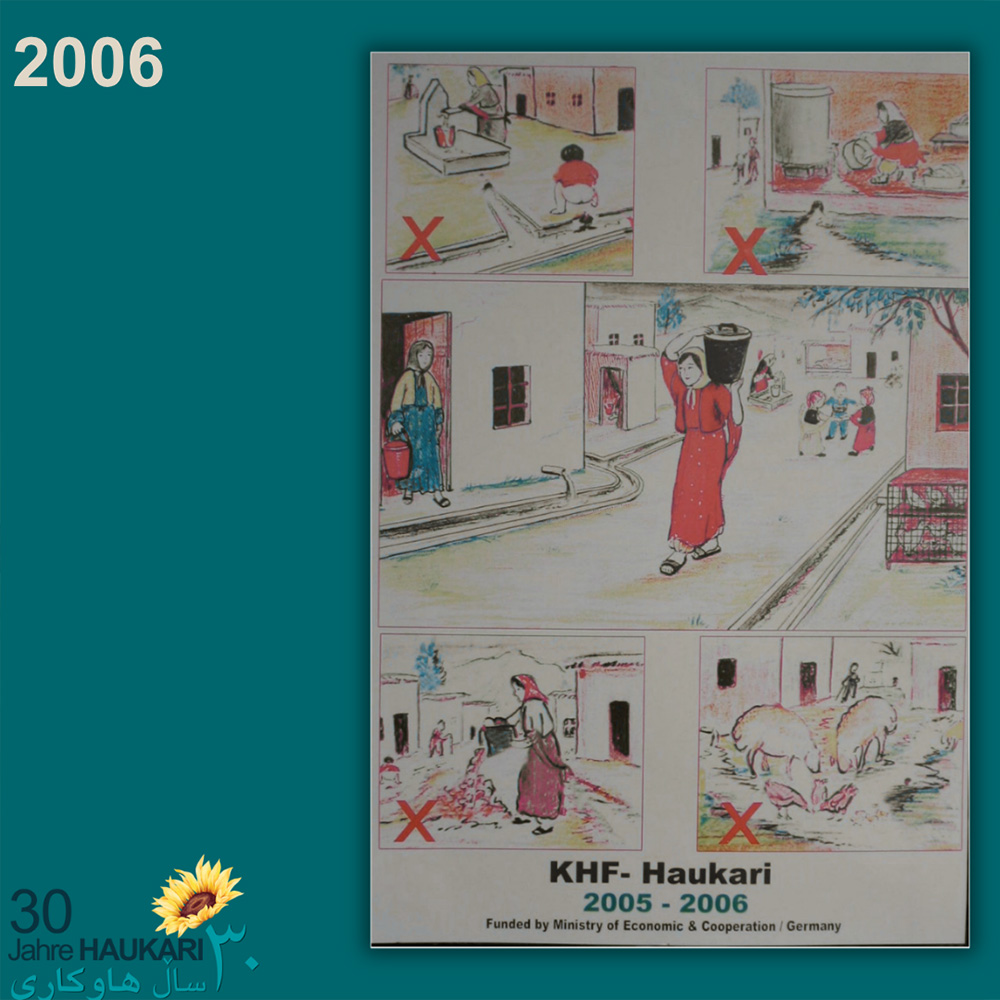

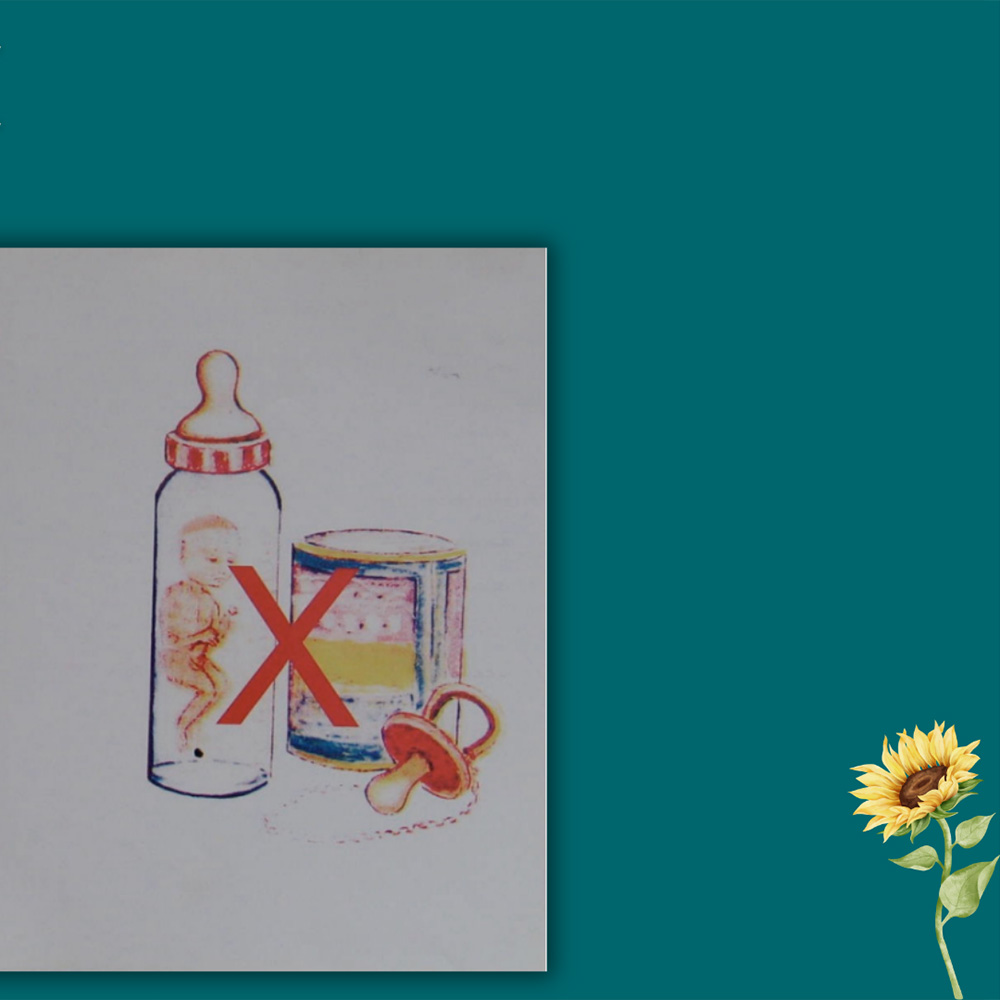
In 2006, the Kurdistan Health Foundation (KHF) provided preventive health care by working in villages in the Garmian Region. The KHF’s mobile teams worked in remote villages where there were no health posts. The villages had been completely destroyed by the genocidal Anfal operations of the Ba’ath regime in 1988. The survivors, mostly women and children, were only able to return to their villages after many years, and only partially. They had persevered in resettlement camps with poor hygienic conditions and hardly any educational opportunities. Each team consisted of a doctor, social worker, health educator and a cook or technician. They provided basic medical care and carried out health education and hygiene measures.
The focus of the programme was on preventing illness and strengthening the medical skills of the village communities.
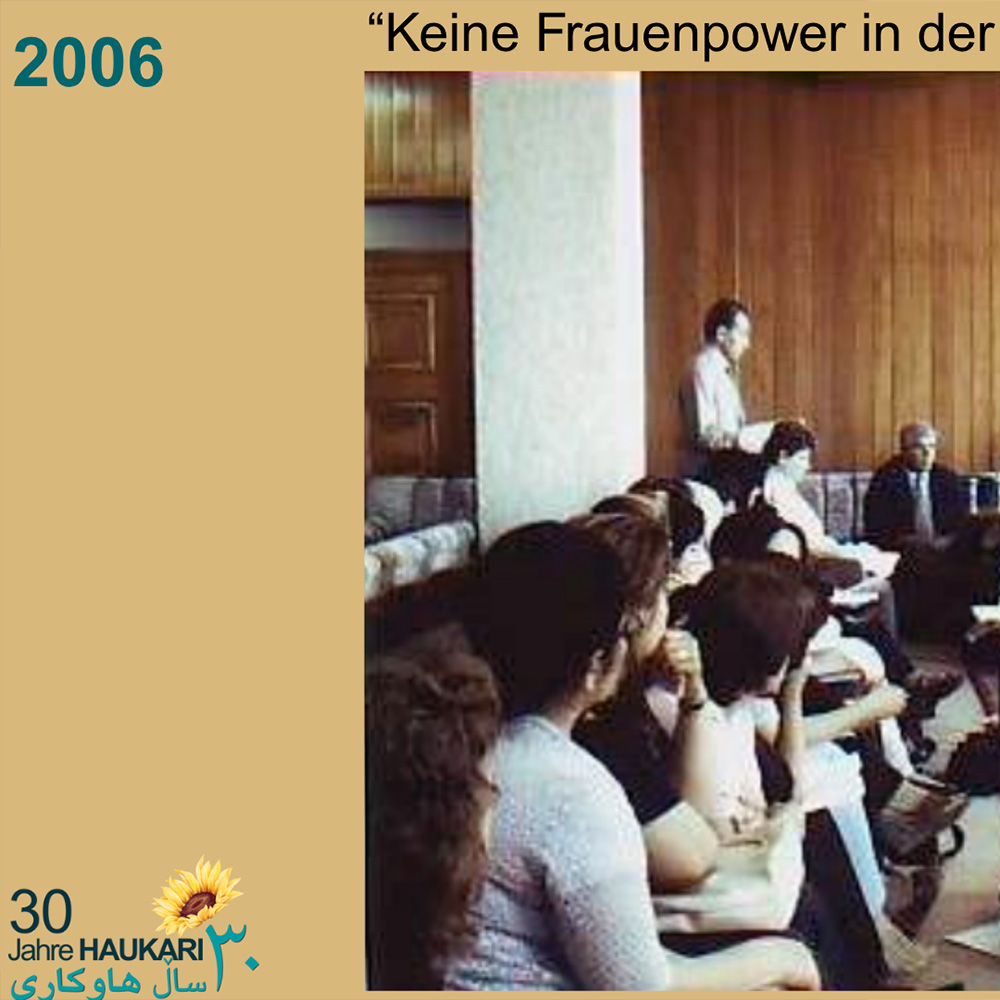

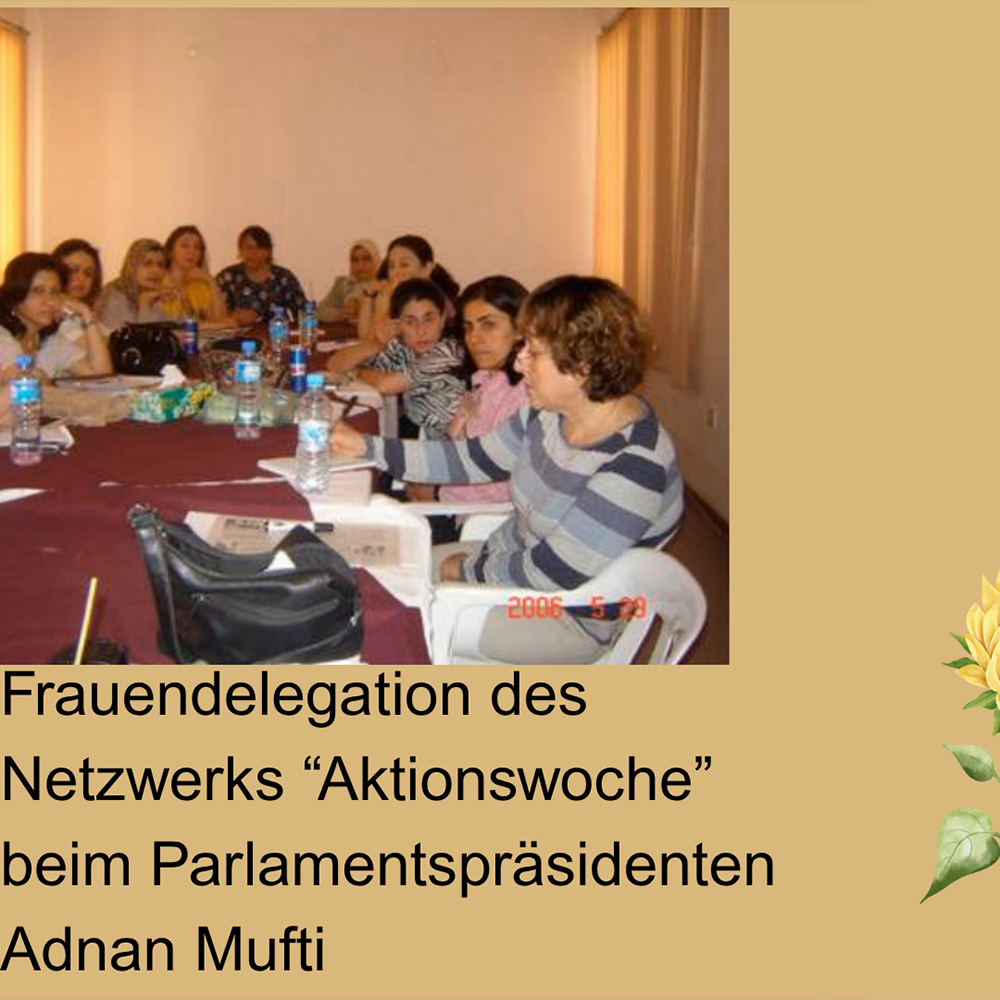
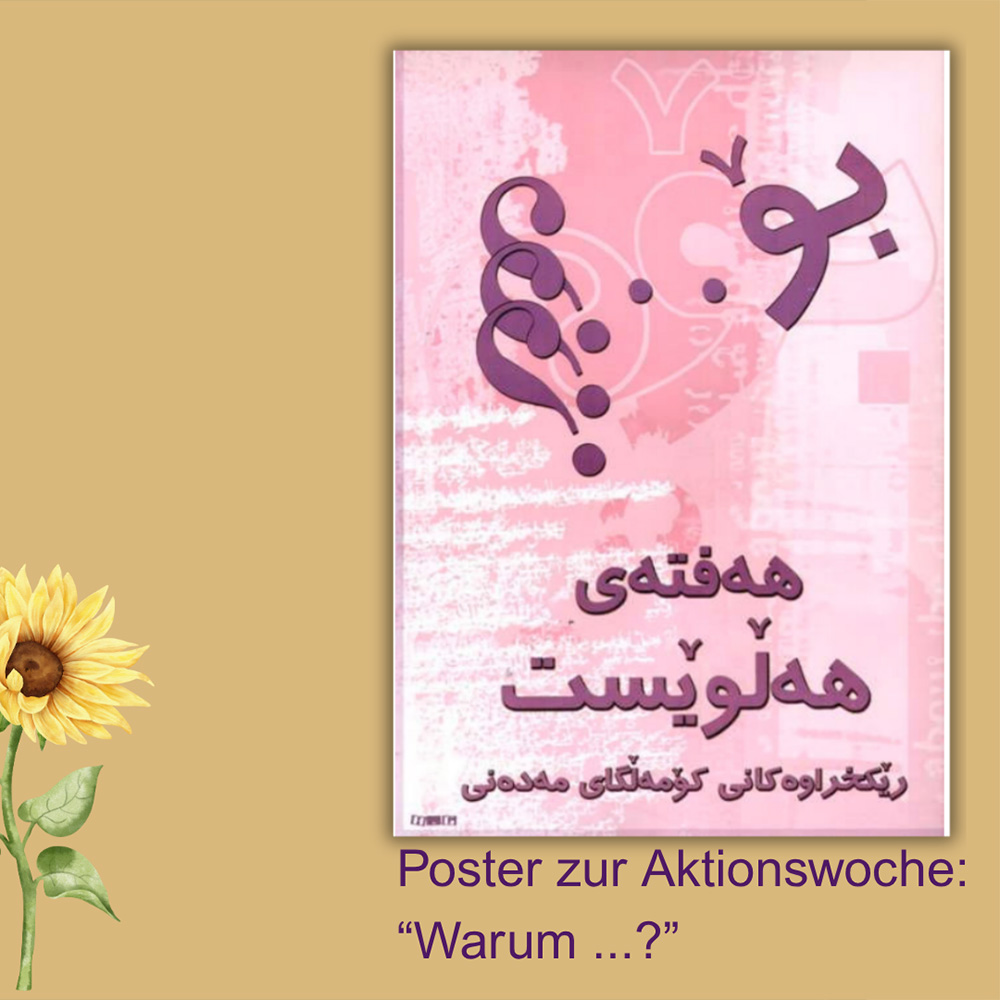
The ‘Action Week’ alliance was founded in 2006 in response to the lack of representation of women in the Kurdish regional government.
The network of women’s organisations from Erbil and Sulaimania – including KHANZAD – organised a campaign with the
aim of empowering women and increasing their representation in government and parliament
Part of the campaign involved writing and publishing protest letters and posters, meeting with politicians and submitting a memorandum to parliament.
2007
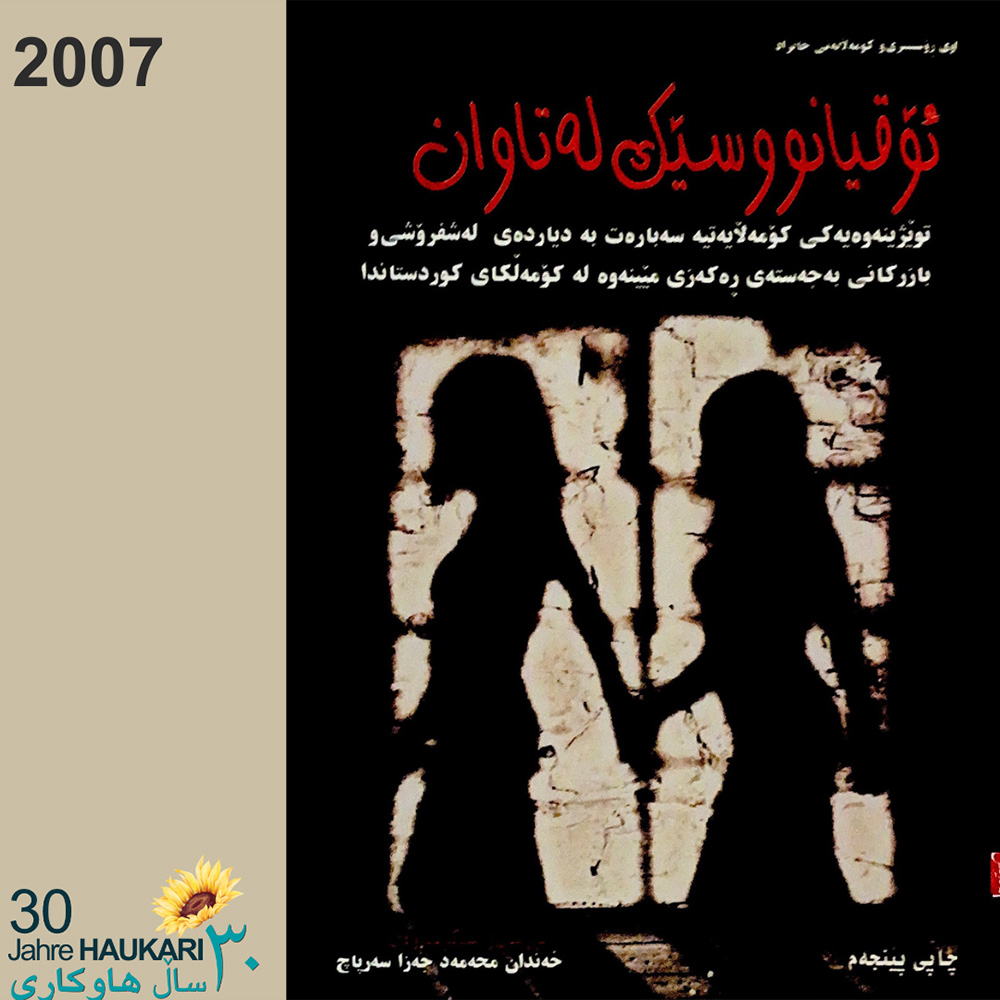
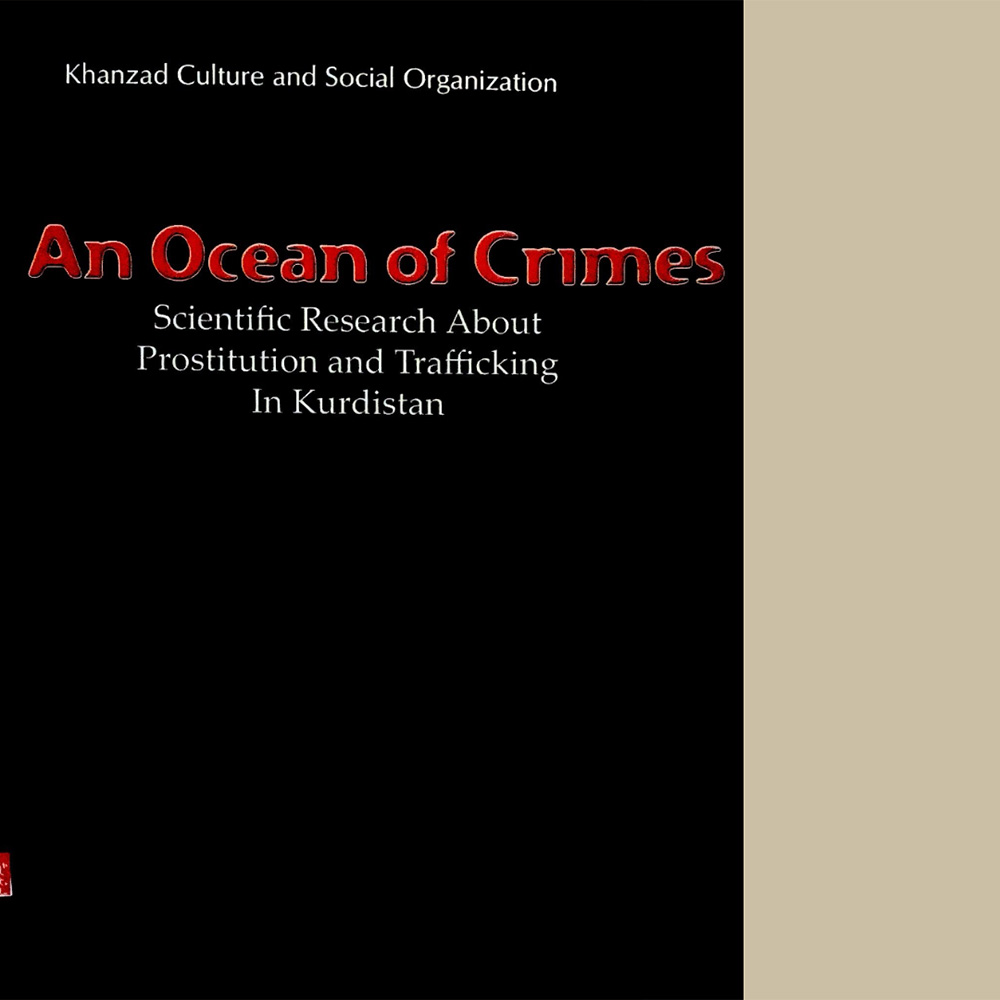
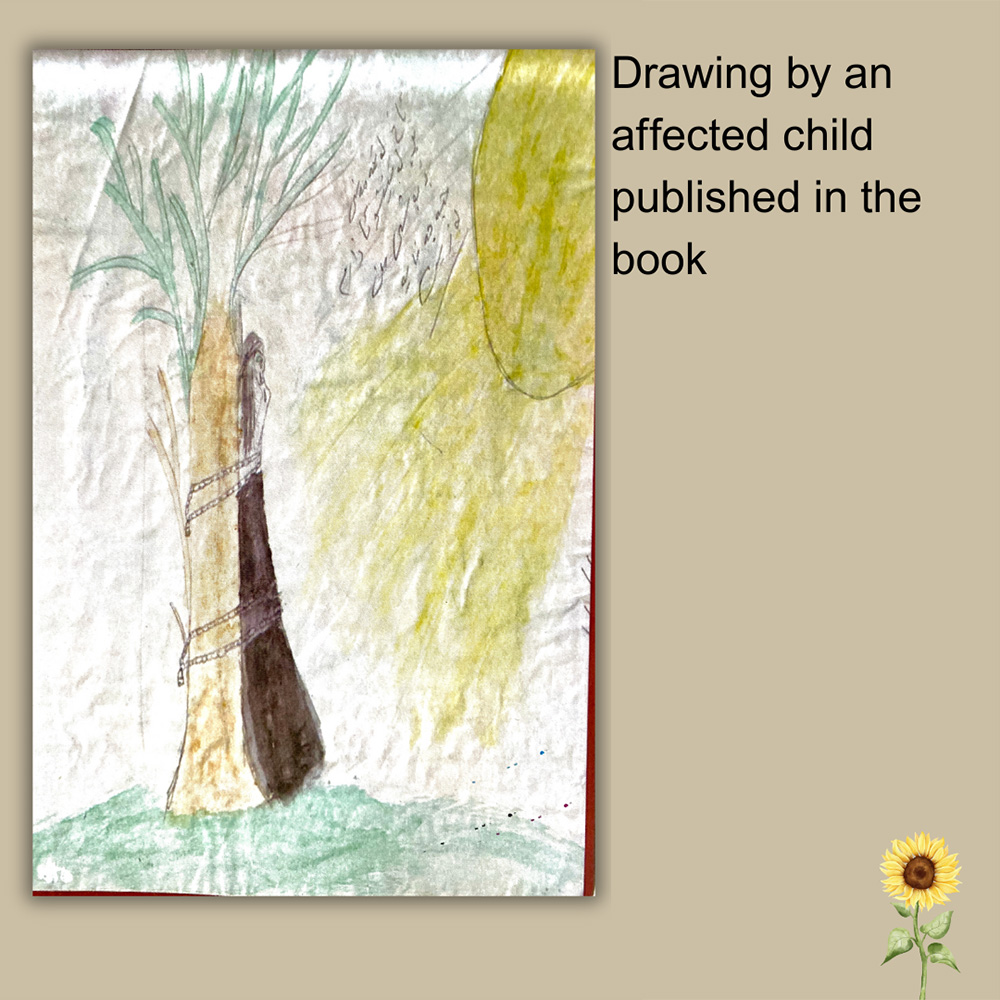
In spring 2007, HAUKARI e.V., together with the Women’s Center KHANZAD, published the book “Ocean of Crimes – A Scientific Study on Prostitution and Trafficking in Women in Kurdistan.” The publication is based on several years of interviews with affected women, clients, and organizers from detention facilities – often imprisoned for prostitution or adultery – and examines their social, economic, and legal backgrounds.
On 25 November 2007 – the International Day for the Elimination of Violence against Women – Khandan Mohammad Jaza, director of the Women’s Center KHANZAD of the time and co-editor of the book, received the Women’s Rights Award (Zhanparez Prize) from the Kurdistan Regional Government in Erbil for her commitment and the study.
2008
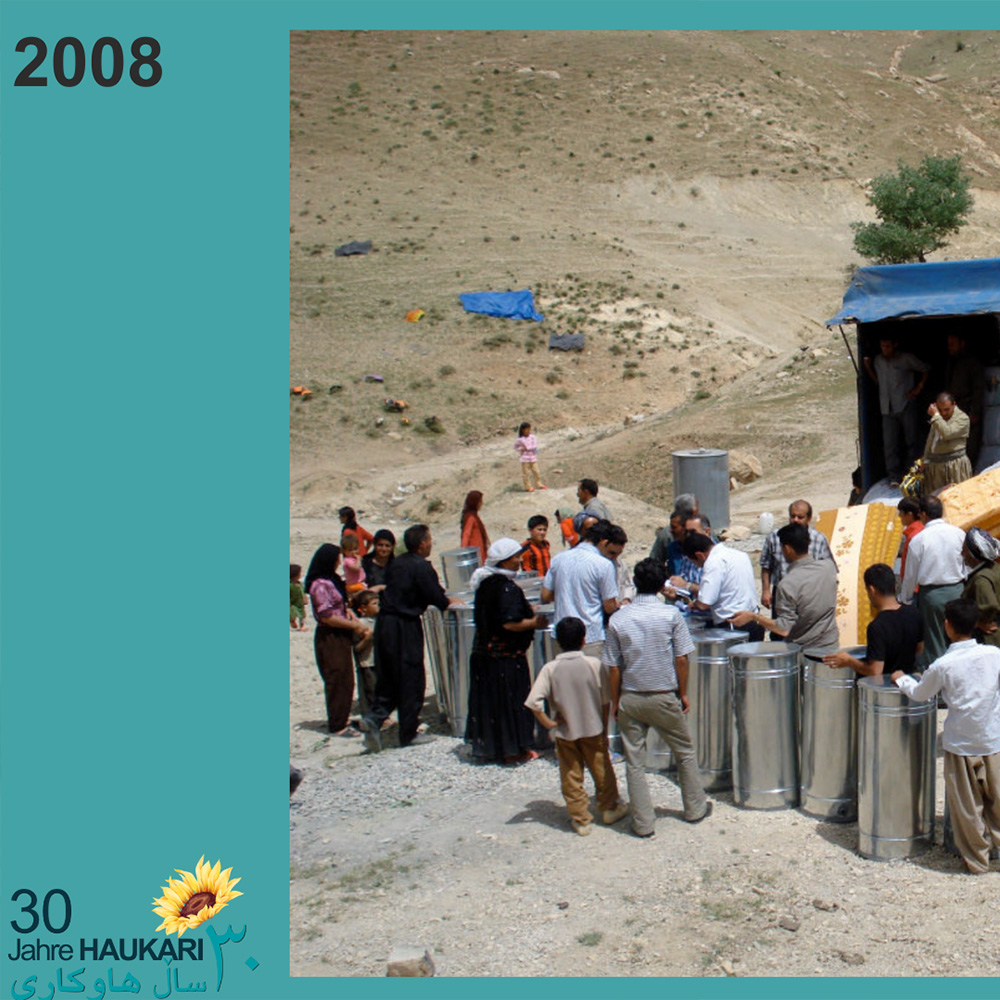
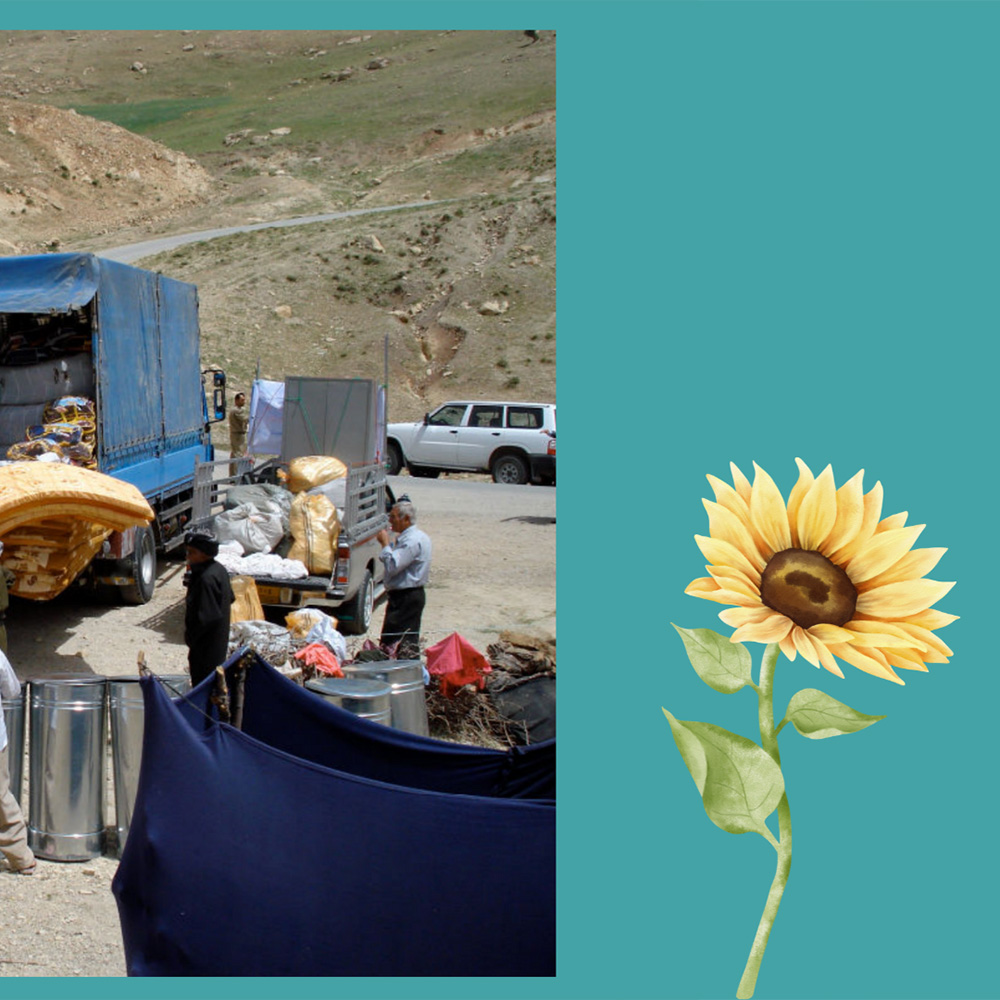

In 2008, HAUKARI provided emergency aid in two programmes together with partners: The KHANZAD team and our partner organisation KHF (Kurdistan Health Foundation) supported several hundred families of Arab internally displaced persons who had fled the civil war in central and southern Iraq and were living in temporary accommodation on the outskirts of Sulaimania. In addition, Haukari e.V., together with KHANZAD and KHF, organised support for Kurdish refugees who had to leave their villages due to air strikes by the Turkish army in the Qandil Mountains.
2009
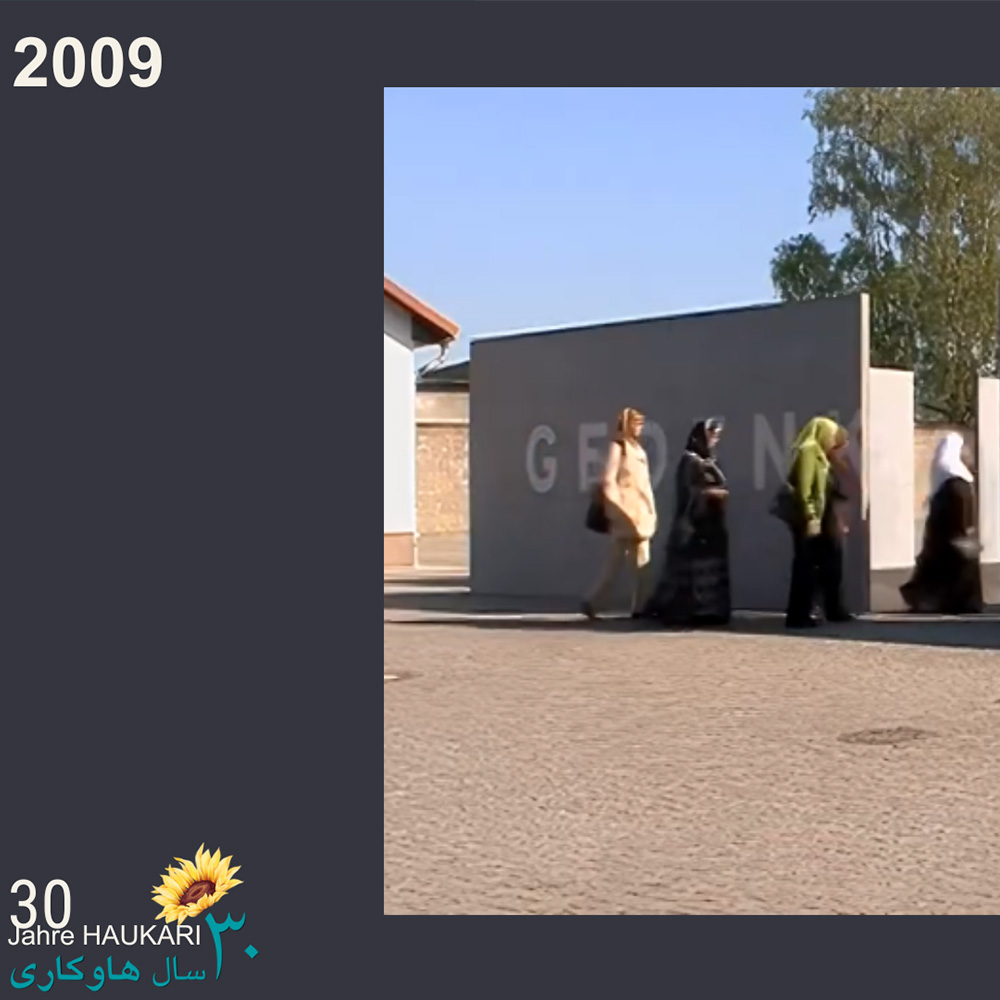
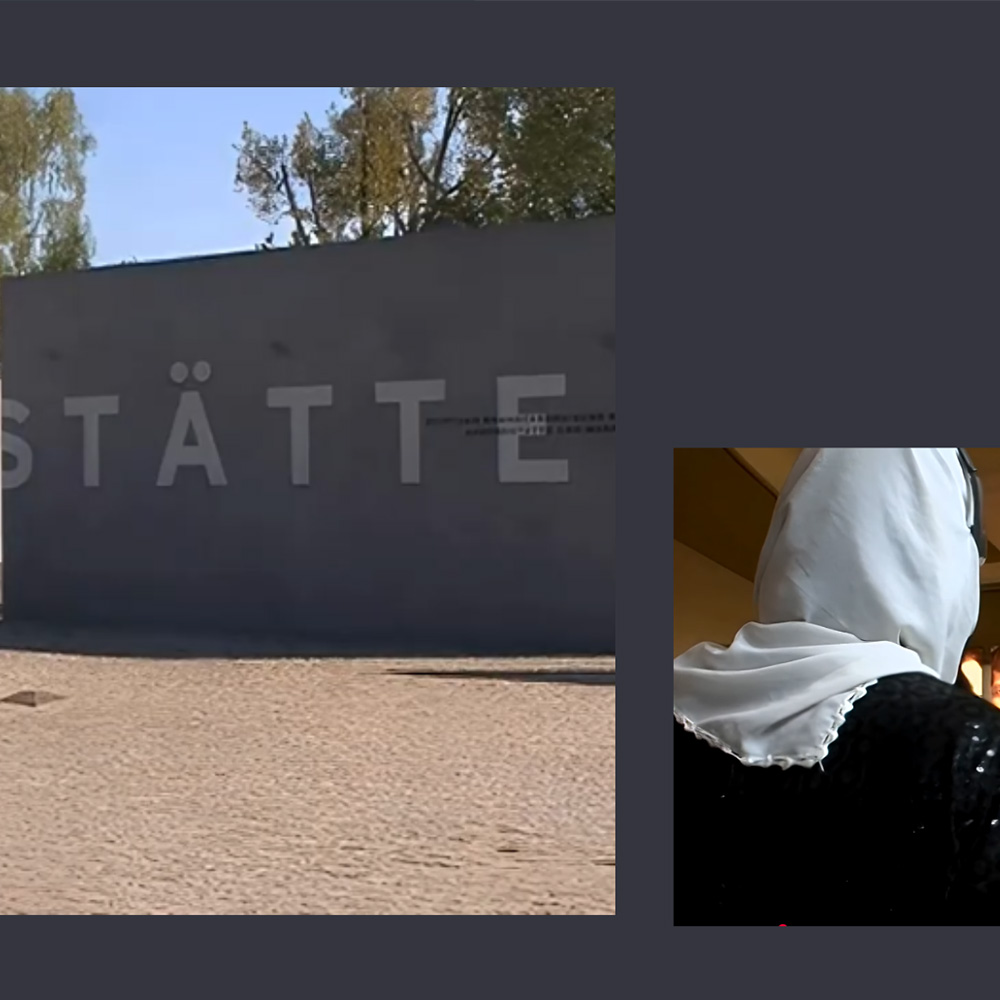
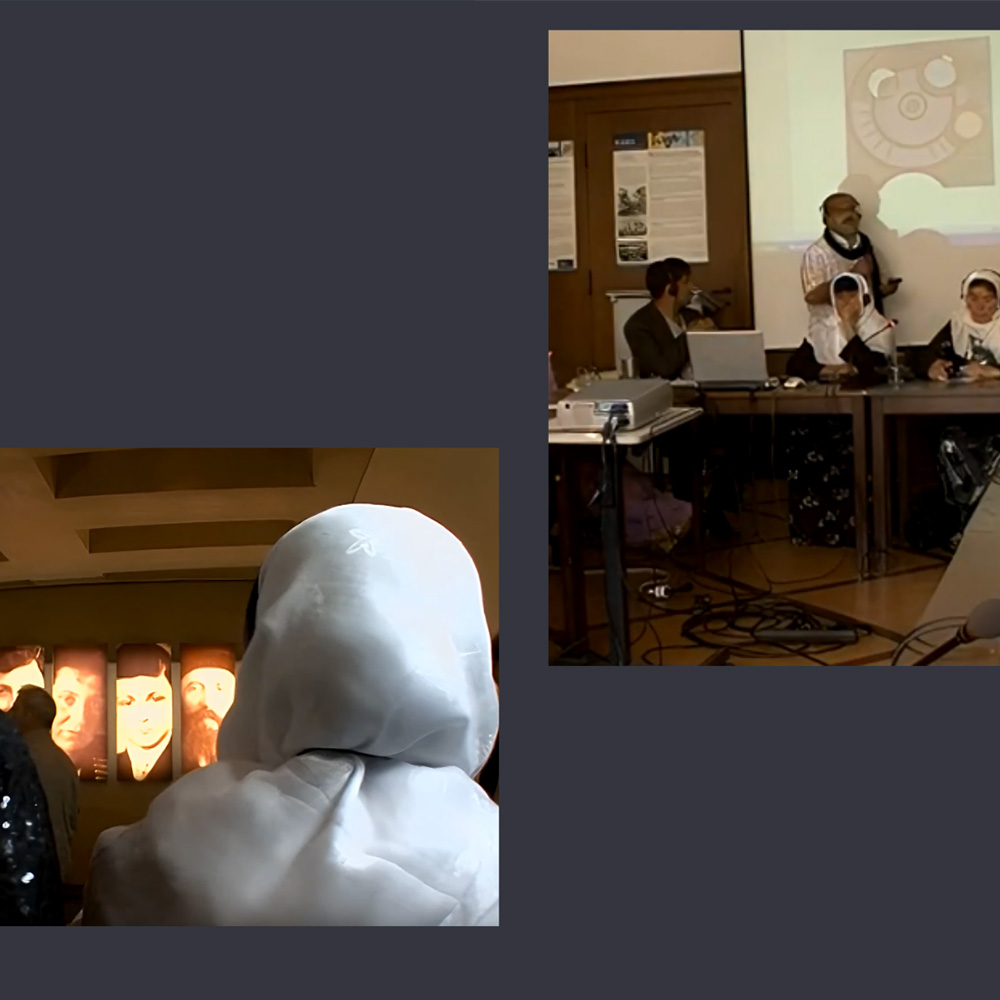
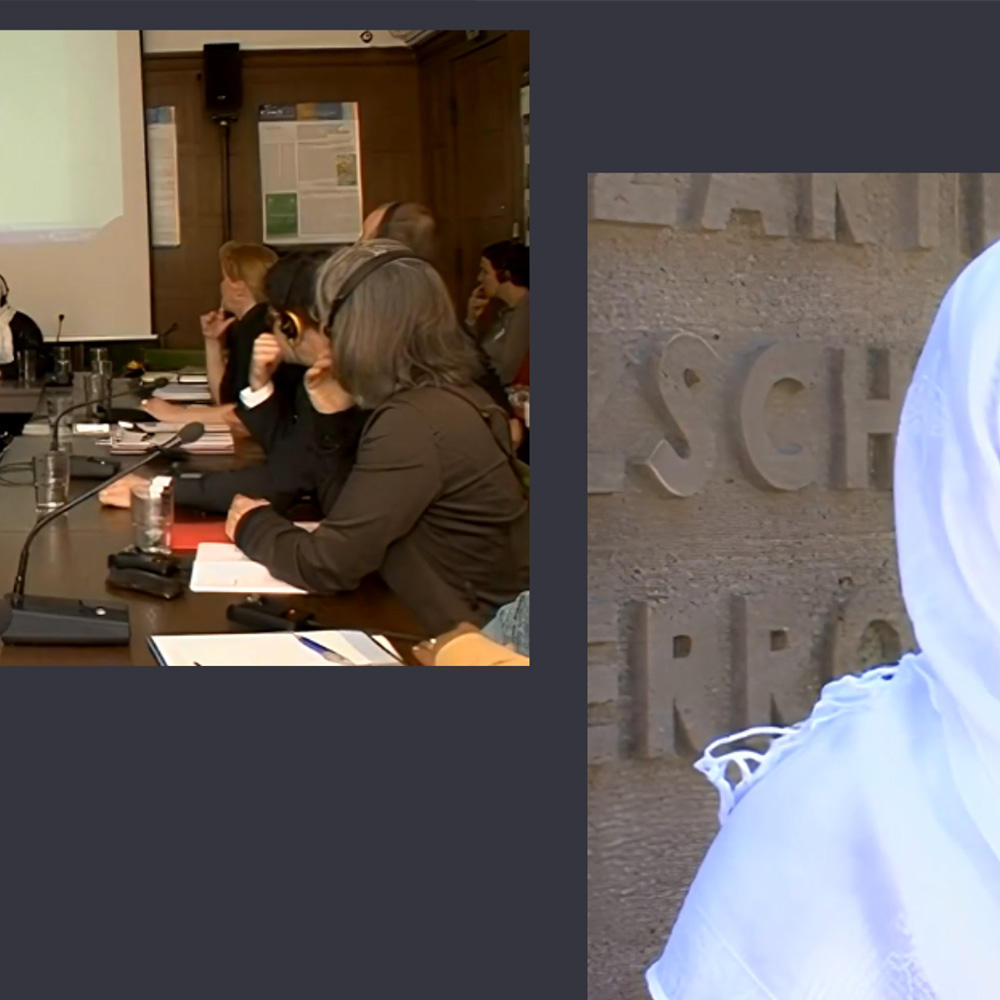
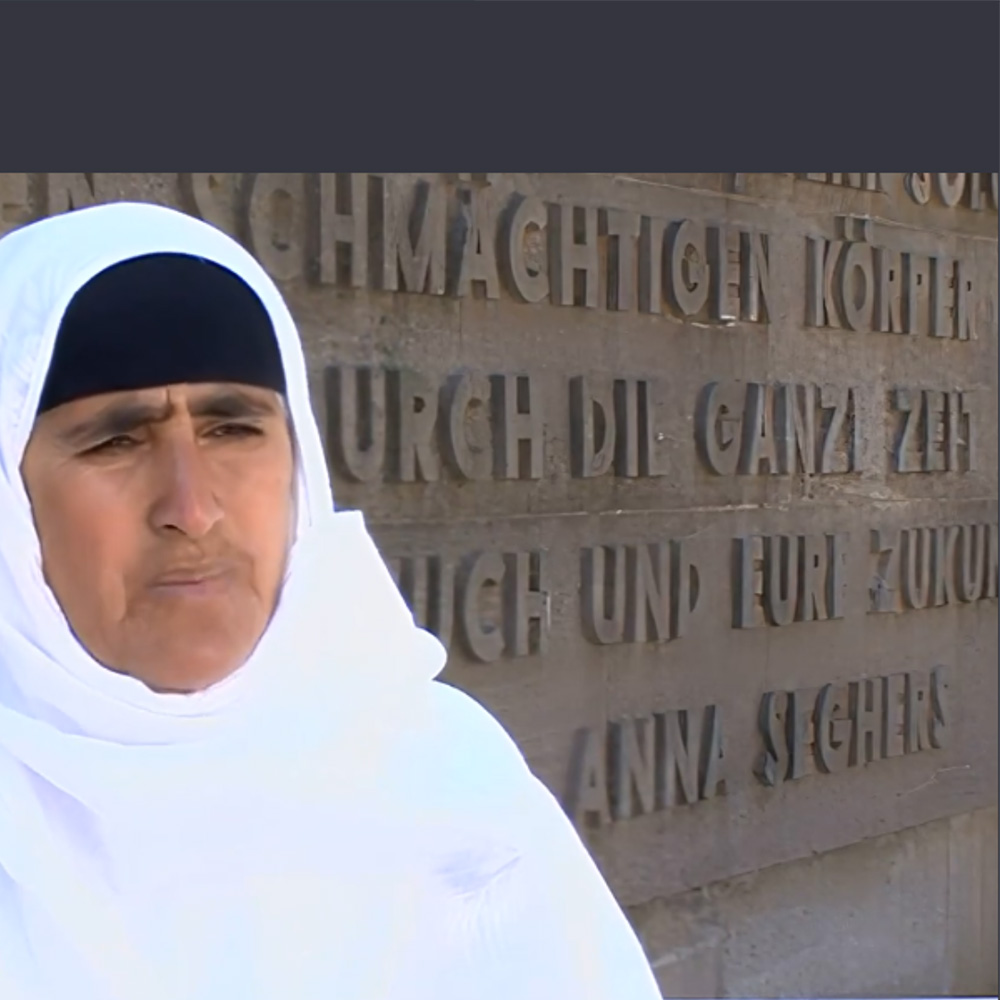
In April 2009, a delegation of Anfal survivor women visited Germany at the invitation of HAUKARI e.V. The aim of the trip was to discuss with women the various forms of remembrance for the victims of the Nazis in Germany.
The programme included a visit to the Memorial to the Victims of the Holocaust in Berlin, the Kurdish delegation’s participation in the Liberation Day commemoration ceremony at the former Ravensbrück concentration camp, a meeting with the initiative ‘Zossen zeigt Gesicht’ (Zossen shows its face), including visits to various memorial sites, a workshop at the Centre for Modern Oriental Studies (ZMO) with representatives of local remembrance projects and memorial sites, a visit to the exhibition at the House of the Wannsee Conference in Potsdam, a visit to the Sachsenhausen Memorial and Museum, a meeting with the Foundation ‘Remembrance, Responsibility and Future’, a visit to the memorial site at the former forced labour camp Schillstraße in Braunschweig with the remembrance project ‘Open Archives’ and a visit to the memorial site ‘Cemetery for Female Forced Labourers’ in Braunschweig.
During this delegation trip, the idea arose to create a self-administered memorial and a place of remembrance in Rizgari, Kurdistan-Iraq, initiated by the Anfal women themselves.
A short film about the trip can be found here.
2010
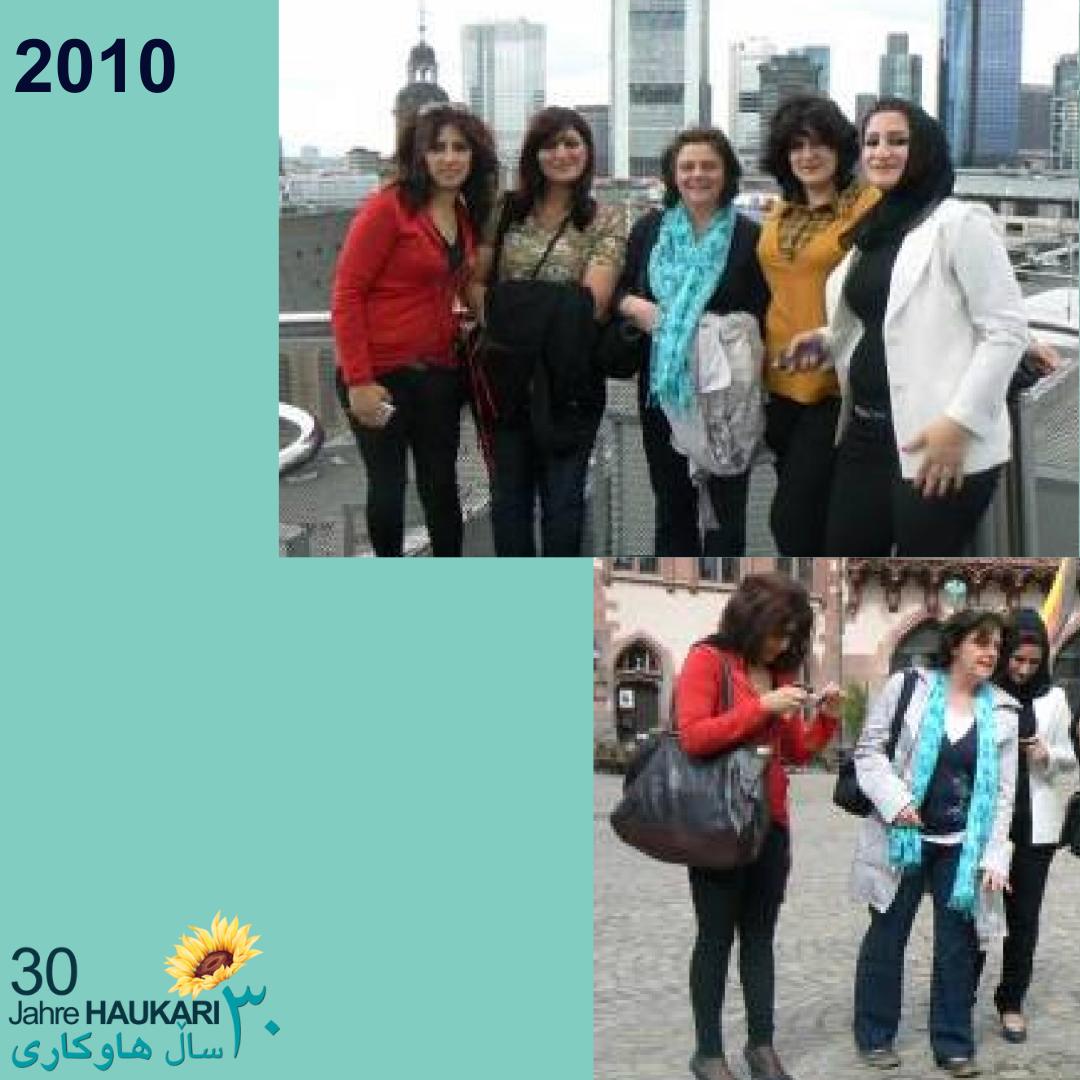
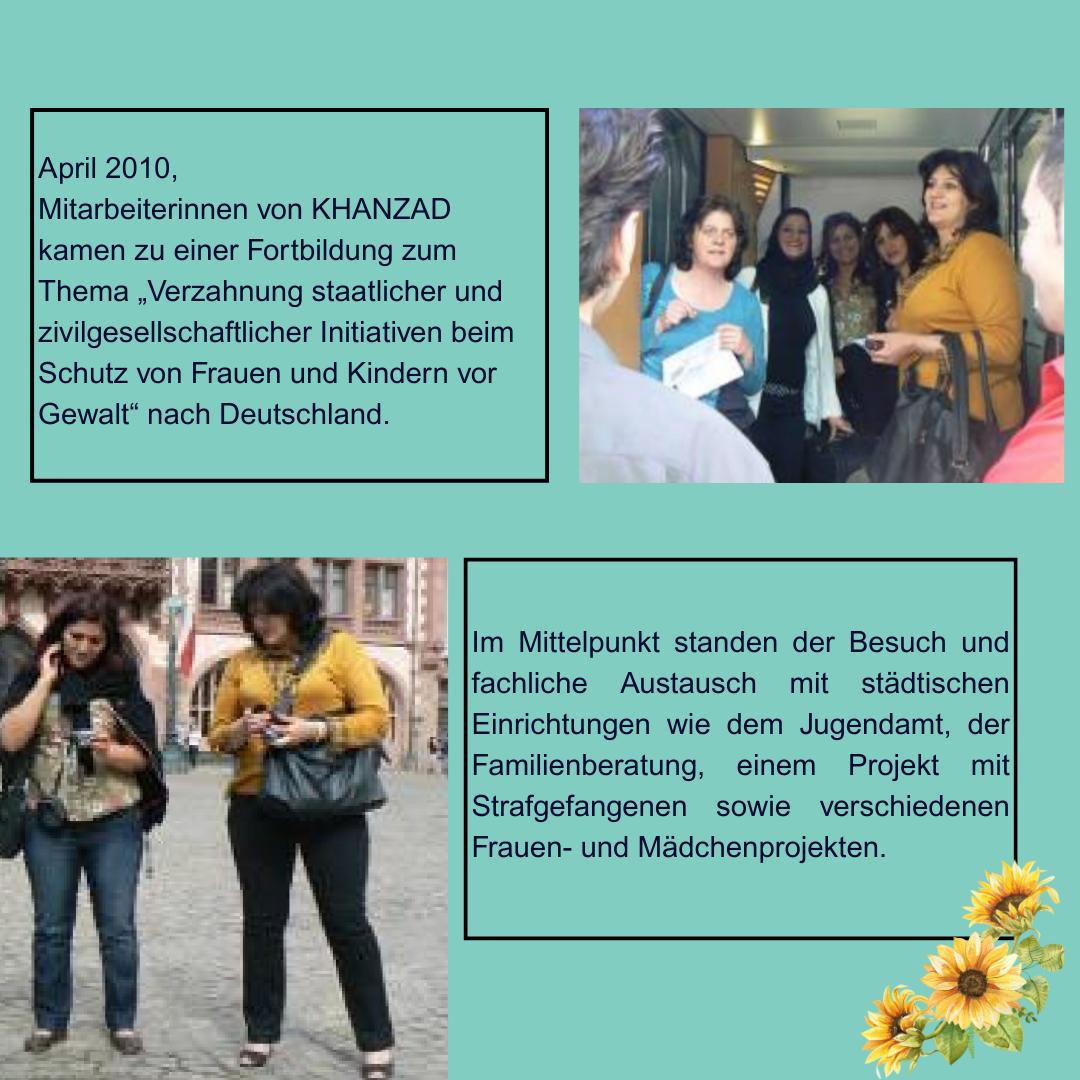
In April 2010 KHANZAD employees came to Germany for a knowledge exchange on the topic of “Interlinking state and civil society initiatives to protect women and children from violence.”
The focus was on visiting and exchanging expertise with municipal institutions such as the Youth Welfare Office, family counseling, a project with prisoners, and various women’s and girls’ projects.
Since the beginning, KHANZAD vehemently continued its work to protect women and young people. In 2010 KHANZAD’s key projects were mobile counseling for women threatened by violence and honor killings, support for women in pre-trial detention and prisons, as well as young people in juvenile detention centres and prisons in Sulaimania.
2011
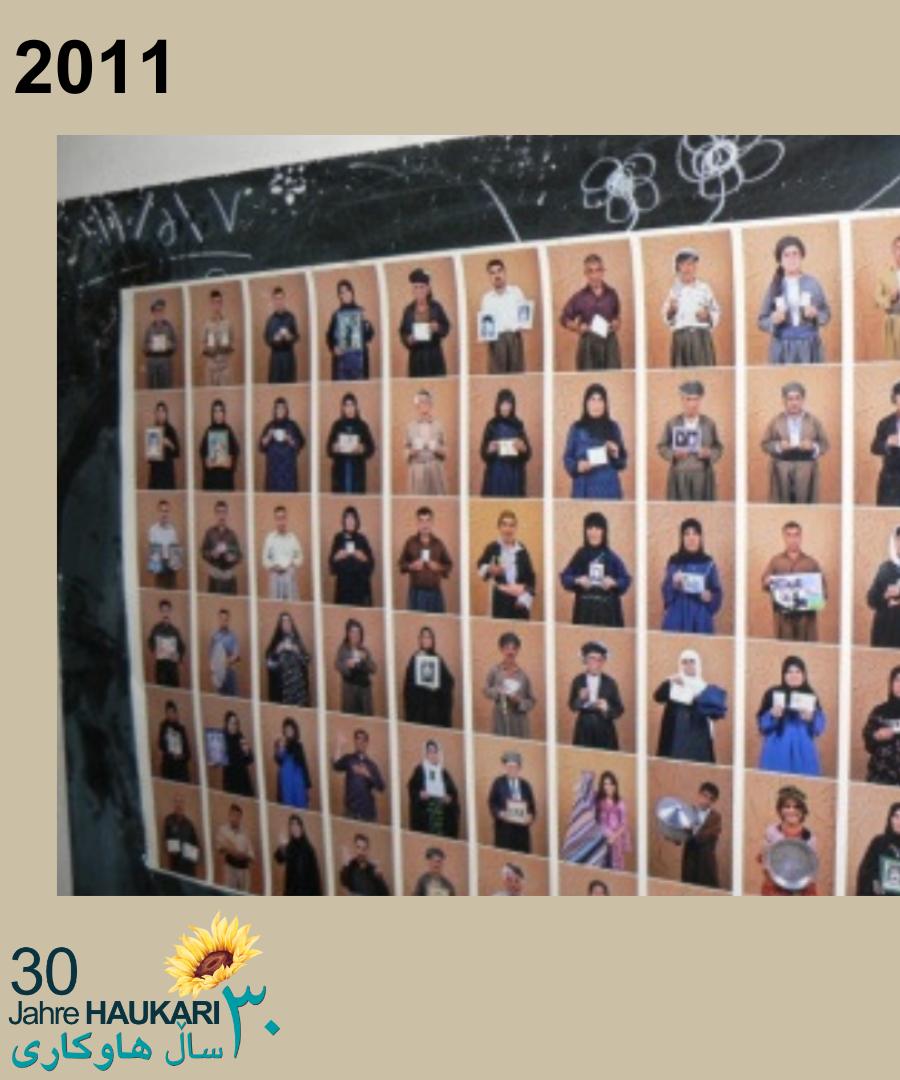
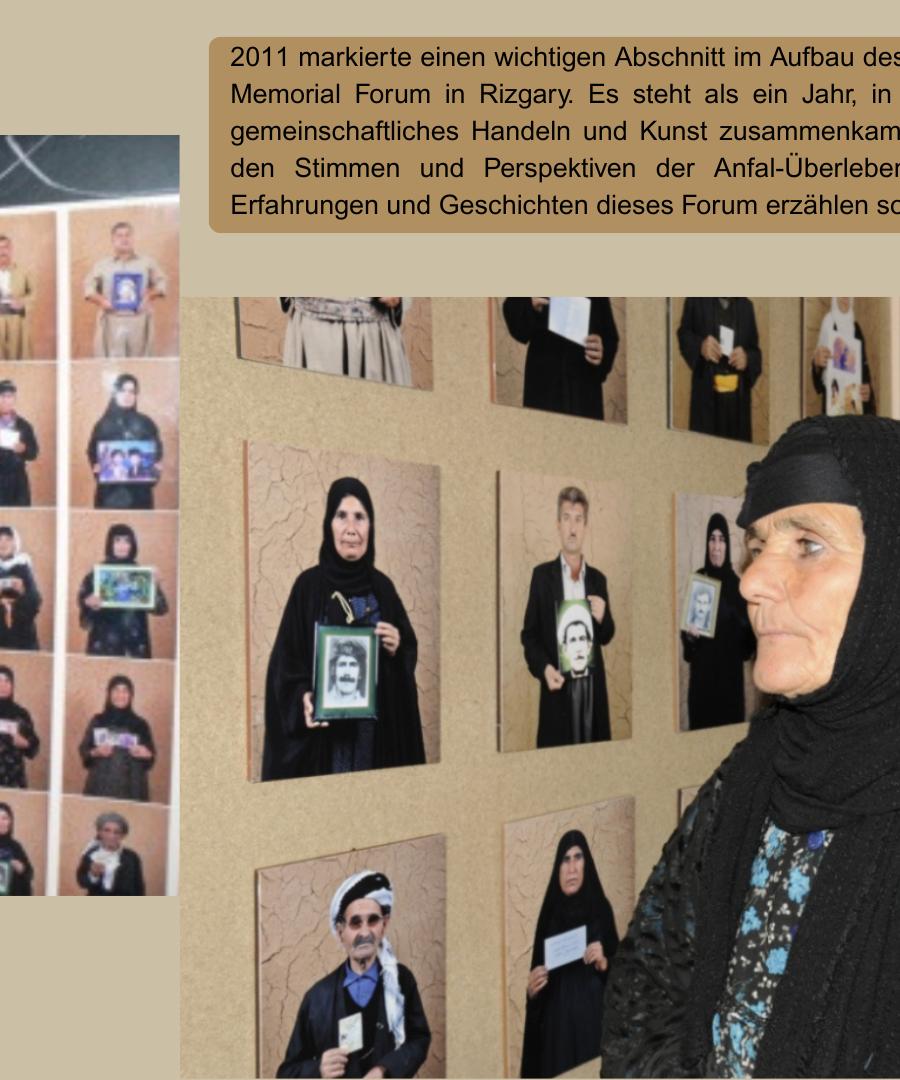
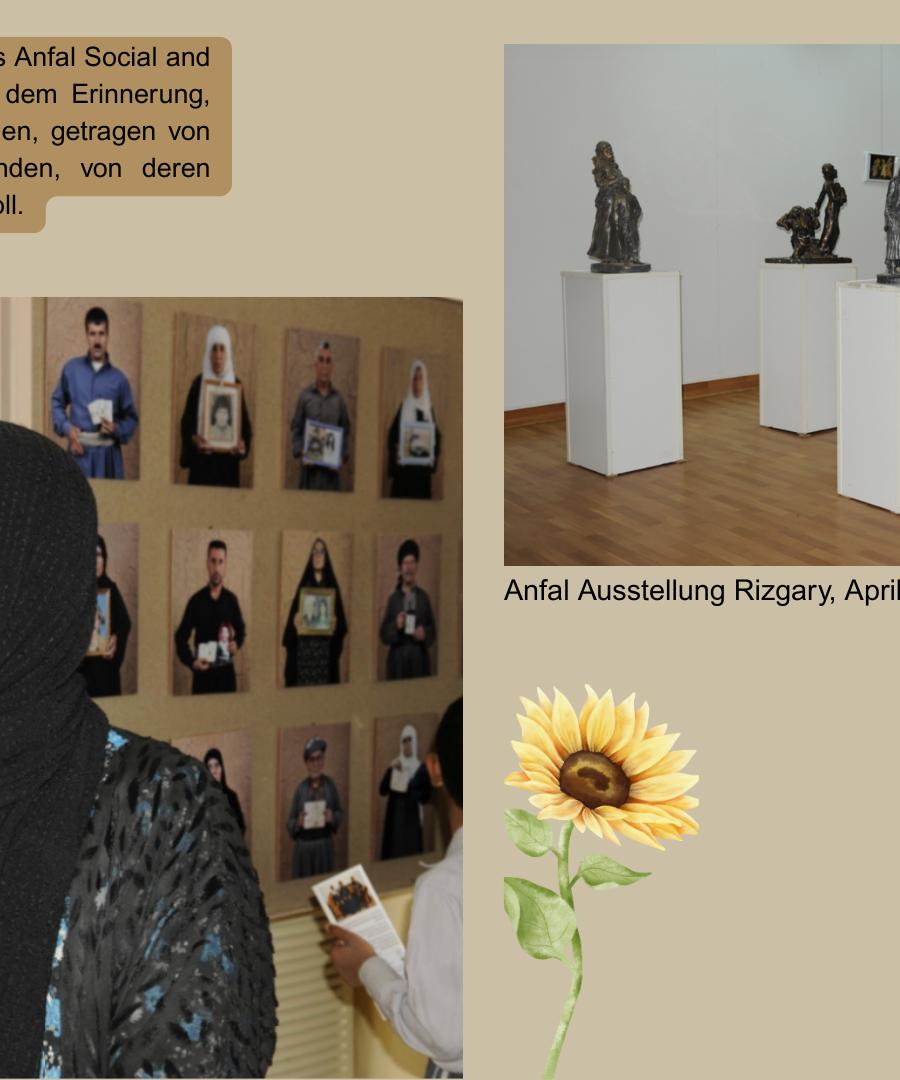


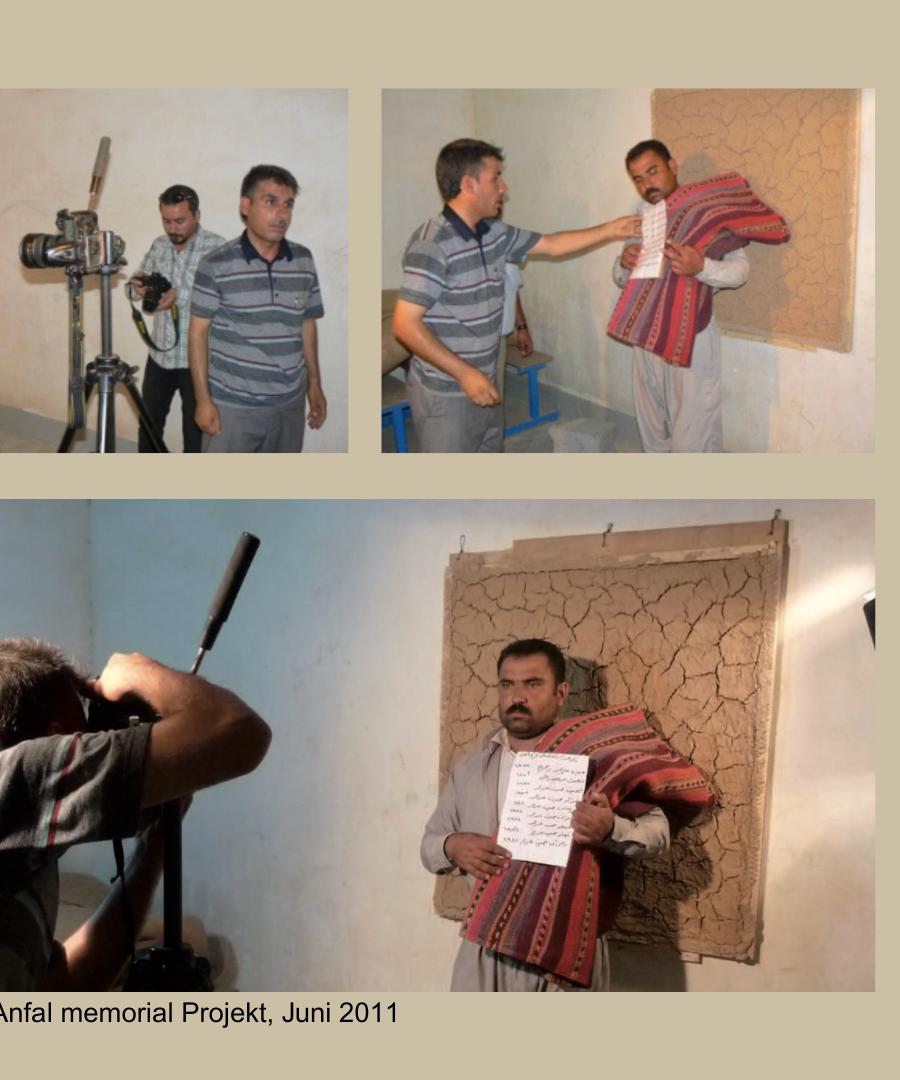
2011 marked an important stage in the development of the Anfal Social and Memorial Forum in Rizgary. While political changes once again delayed the official start of construction of the memorial, the energy and determination of the Anfal survivors continued to grow. The Anfal survivors shaped this process with impressive clarity, creativity, and perseverance. This year, intensive discussion spaces were created between Anfal women survivors and Kurdish artists, in which ideas for a figurative memorial were developed. The memorial was to make their specific experiences visible and honor their strength. From numerous models submitted, five designs were selected for further development. For many of those involved, this joint artistic process was an important step toward a self-determined culture of remembrance. The work on the growing photo documentation also created new spaces for coming together. The appointments, initially in Rizgary and later in surrounding towns and villages, became places of remembrance, exchange, and mutual support. The resulting contributions are to play a central role in the future exhibition at the Remembrance Forum. Public presentations of the project work and exchanges with government representatives and German remembrance initiatives made the concerns of the Anfal women more visible and strengthened their position in social dialogue.
2011 thus stands as a year in which memory, collective action, and art came together, carried by the voices and perspectives of those whose experience and stories this forum is intended to tell.
2012
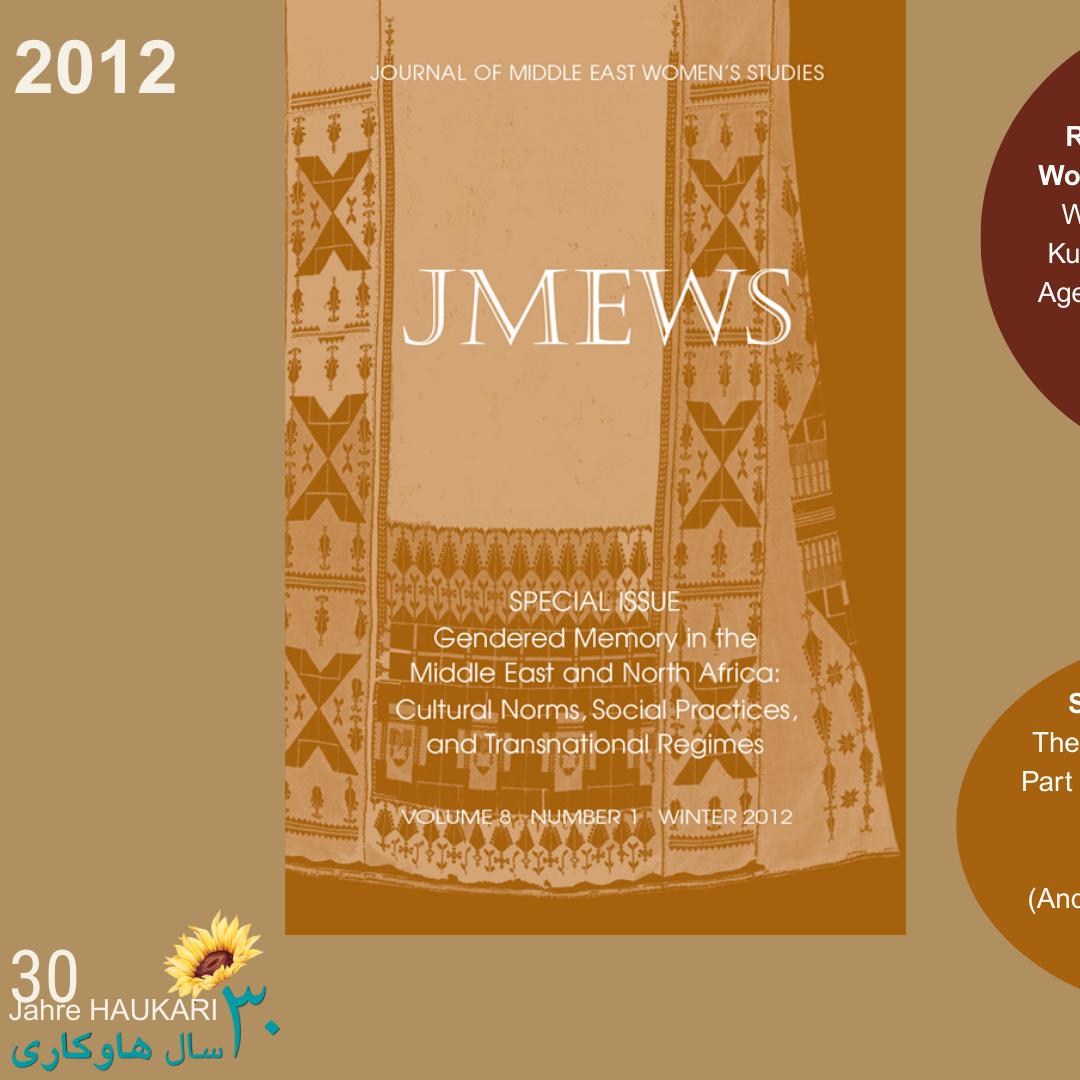
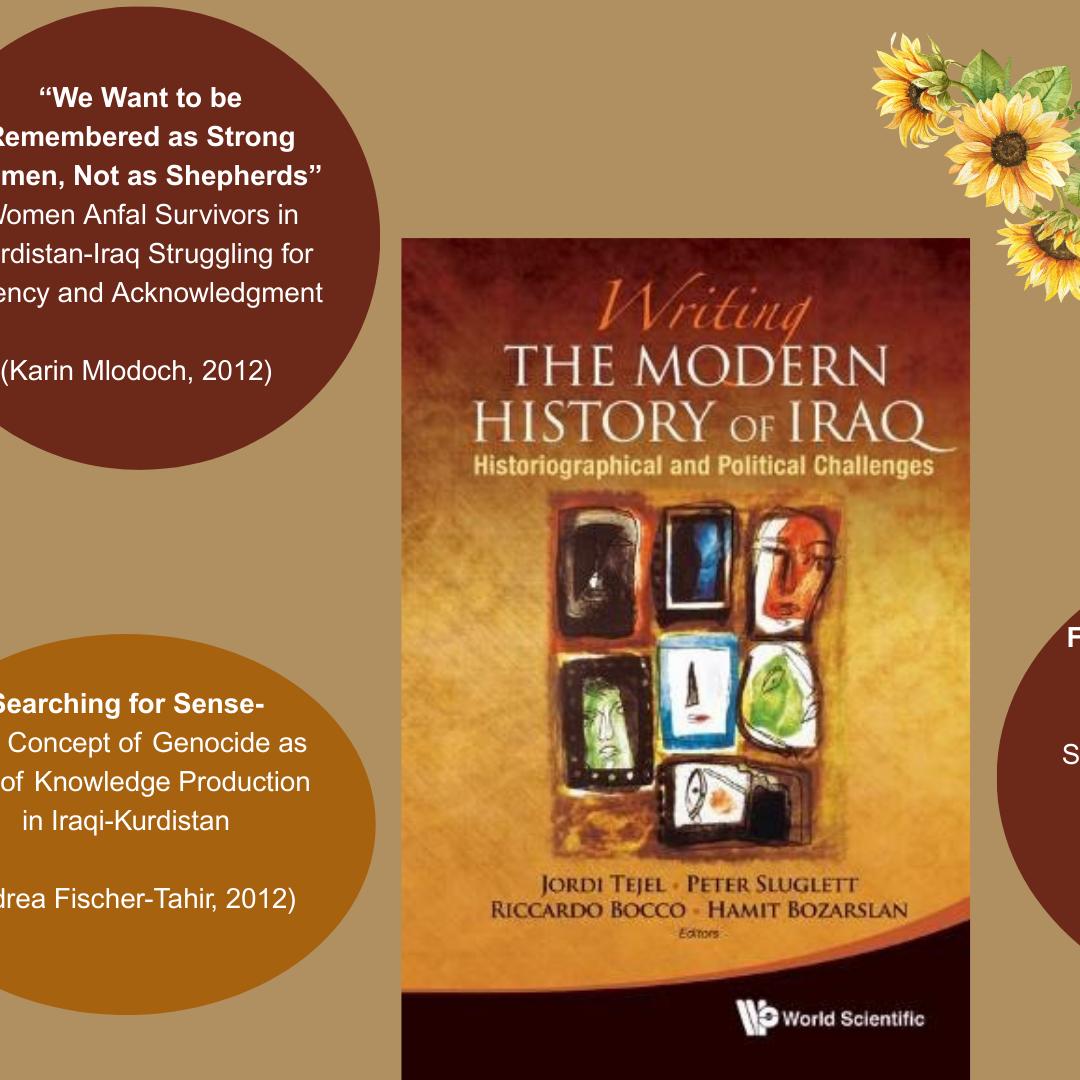
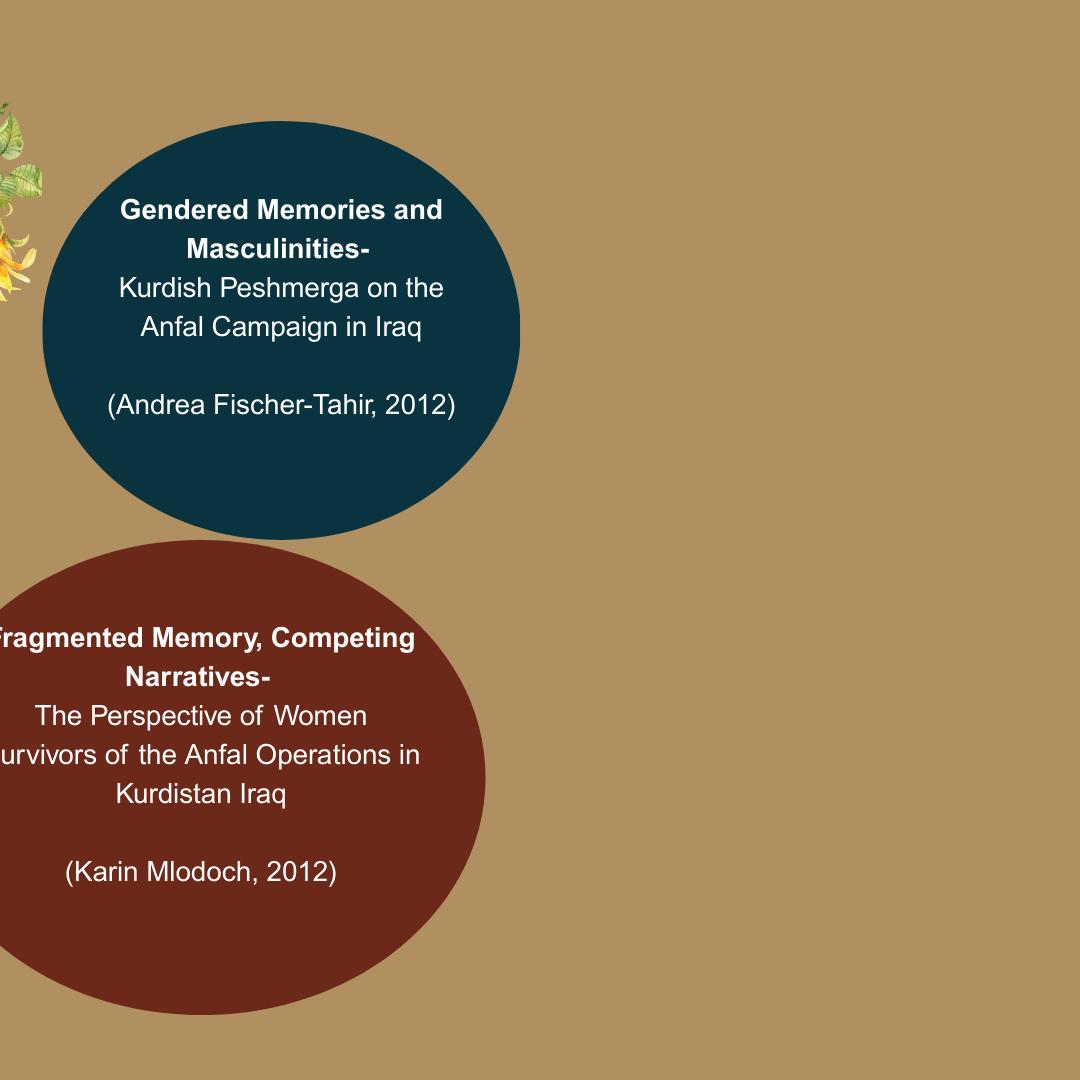
Haukari e.V. contributes to critical public and academic debate on Kurdistan-Iraq by disseminating knowledge on political, social, and human rights issues through publications, lectures, and events in Germany and across Europe. Our 2012 publications highlight questions of violence, memory, and gendered experiences of the Anfal operations, foregrounding the perspectives of women survivors and Kurdish Peshmerga. Featuring works by Karin Mlodoch and Andrea Fischer-Tahir, these studies examine agency, competing narratives of remembrance and the concept of genocide in the context of the Anfal operations, thereby fostering transnational dialogue and recognition of survivors’ experiences.
Curious to read? You can find the Publications here:
- “We Want to be Remembered as Strong Women, Not as Shepherds”: Women Anfal Survivors in Kurdistan-Iraq Struggling for Agency and Acknowledgment (Karin Mlodoch, 2012)
- Fragmented Memory, Competing Narratives- The Perspective of Women Survivors of the Anfal Operations in Kurdistan Iraq (Karin Mlodoch, 2012)
- Searching for Sense_ The Concept of Genocide as Part of Knowledge Production in Iraqi-Kurdistan (Andrea Fischer-Tahir, 2012)
- Gendered Memories and Masculinities- Kurdish Peshmerga on the Anfal Campaign in Iraq (Andrea Fischer-Tahir, 2012)
The small HAUKARI-Memory
A playful greeting from the early days of HAUKARI e.V.: This memory game was already featured on the first HAUKARI e.V. website over 20 years ago and shows photos from the early years of our work. Test your memory and find all the pairs!